
San Antonio Homeowners: Water Heater Lifespan and 4 Maintenance Steps
Most tank water heaters run for 8 to 12 years, while tankless units commonly reach 15 to 20 years or more, according to Rheem. Heat pump water heaters can push even further into that range while cutting energy costs along the way. If your unit is already approaching or beyond ten years old, check its age and have the anode rod and tank flush inspected before a slow leak develops.
TL;DR:
Tank water heaters typically last 8 to 12 years, while tankless units can reach 15 to 20 years or more with proper maintenance.
Hard water and poor installation can significantly shorten a heater’s lifespan, regardless of the unit type or warranty.
Regular maintenance, including annual flushing and anode rod inspection every 2 to 3 years, can extend service life and prevent leaks.
Signs indicating a need for replacement include rising repair costs above 50 percent of the unit’s value or noticeable reduction in hot water supply after 10 years.
Replacing an old water heater with an ENERGY STAR heat pump model can save over $3,500 over its lifetime, making it a cost-effective upgrade in the long term.
Table of Contents
Typical Water Heater Lifespan by Type
The type of unit sitting in your garage or closet sets the baseline for how long you can expect it to last. Conventional tank heaters top out around 8 to 12 years in most homes, according to Rheem, largely because the tank itself is a sealed vessel that eventually succumbs to internal corrosion. Tankless units skip that problem since there’s no standing water reservoir to rust through, which is why they routinely hit 15 to 20 years with proper upkeep.
Here’s how the main types stack up:
Tank water heaters: 8 to 12 years on average
Tankless water heaters: 15 to 20 or more years
Heat pump water heaters (HPWHs): Comparable or longer life, with notable energy savings baked in
Installation quality matters just as much as the equipment itself. A poorly sized unit, incorrect venting, or a rushed installation can shave years off any of these ranges regardless of brand or price point. A longer manufacturer warranty, often 9 to 12 years versus a basic 6-year term, tends to signal thicker insulation and sturdier components, according to InterNACHI.
What Determines How Long a Water Heater Lasts?
Two identical water heaters installed on the same day can age at wildly different rates depending on what’s running through them and how they’re treated. Hard water is one of the biggest culprits. High mineral content accelerates scaling inside the tank and on heating elements, dragging down both efficiency and lifespan, per InterNACHI. Homes on well water or in regions with mineral-heavy municipal supplies see this problem show up faster than homes with softened water.
The factors that matter most:
Water hardness: Scale buildup reduces efficiency and speeds up component wear
Anode rod condition: A depleted rod leaves the tank exposed to corrosion
Household usage patterns: A family of six taxes a unit far more than a retired couple
Installation and placement: Poor ventilation, flood-prone locations, and rushed setups shorten service life
Warranty length: Often a proxy for how the unit was built in the first place
Anode rods can be fully consumed in as little as 1 to 4 years depending on your water chemistry, and once that rod is gone, the tank itself starts corroding instead.
How Do You Extend a Water Heater’s Lifespan?
Extending your water heater’s life comes down to a short list of maintenance tasks that most homeowners simply never learned to do. None of them require special skills, though a couple are worth handing off to a professional.
Flush the tank annually. Sediment builds up at the bottom of every tank heater over time, insulating the water from the burner and forcing the unit to work harder. A basic flush follows four steps: shut off power or gas to the unit, connect a hose to the drain valve, let the tank drain fully, then refill and restore power. InterNACHI lists annual flushing as a standard recommendation for exactly this reason.
Inspect the anode rod every 2 to 3 years. Pull the rod and look at it. If more than 6 inches of the steel core wire is exposed, or it’s coated in calcium, it’s time for a new one. Homes with harder water need to check more often since mineral content speeds up the rod’s sacrificial corrosion, according to StructureTech.
Set the thermostat to 120°F. Higher settings, especially above 140°F, accelerate corrosion inside the tank and increase mineral scaling, on top of raising your energy bill for no real benefit.
Know when to call a pro. A seized anode rod is common, and removing one without the right leverage can damage the tank’s fittings. Technicians typically use an impact wrench to break it loose safely, a detail worth knowing before you attempt it yourself, per StructureTech.
Pro Tip: Mark your anode rod inspection date on a calendar reminder the same day you check your smoke detector batteries. Both are easy to forget, and both matter more than people think.
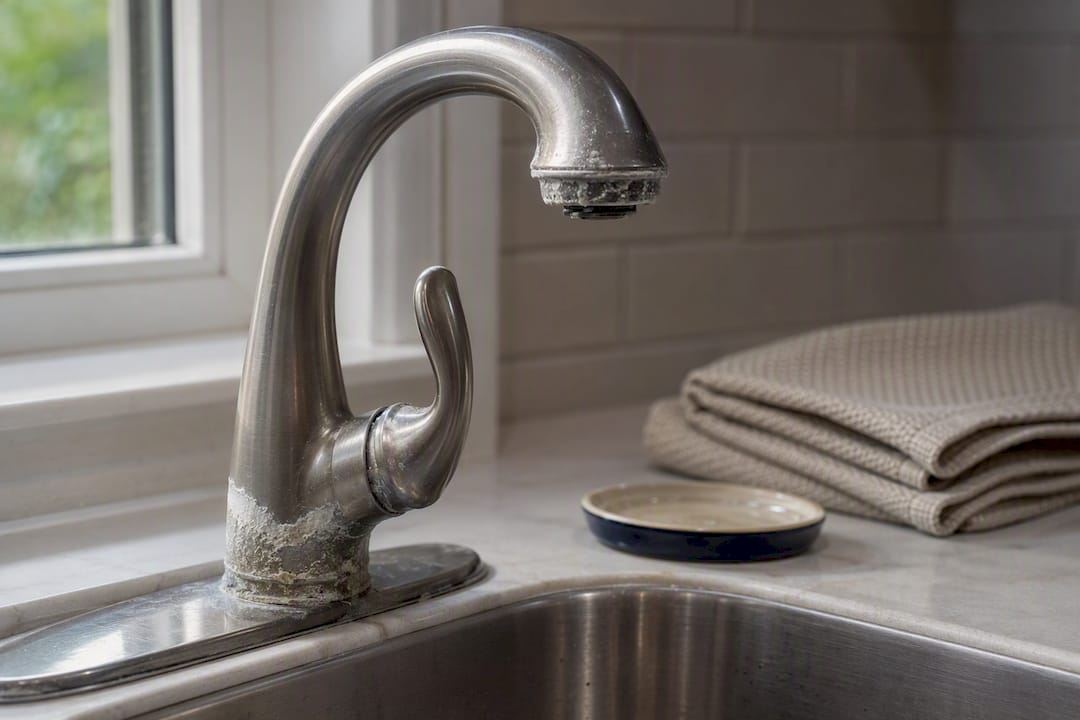
If your water pressure runs high or your softener is undersized, a tile and grout resource on hard water stains can help you spot mineral buildup around fixtures before it becomes a bigger plumbing issue.
Should You Repair or Replace an Aging Water Heater?
A handful of warning signs tell you the clock has run out, whether or not your calendar agrees. Watch for these:
Water pooling at the base of the tank or visible corrosion on fittings
Rust colored water coming from hot taps, even after running for a minute
Rumbling or banging noises from sediment hardening at the tank bottom
Hot water that runs out noticeably faster than it used to
None of these signs are subtle once you know to look for them, but plenty of homeowners ignore the noises until the leak shows up.
The industry rule of thumb is straightforward: if a repair estimate comes in above roughly 50% of what a full replacement would cost, replacement is the better investment, according to Rheem. That math shifts even further toward replacement once a unit passes the 10 year mark, since you’re often paying to patch one problem while three more are quietly forming. If you’ve lost hot water entirely, that’s usually the moment to get both options priced out side by side.
Replacing an aging unit with an ENERGY STAR certified heat pump model can save a household of four roughly $330 a year and more than $3,500 over its lifetime, according to ENERGY STAR. That kind of payback changes the math for anyone on the fence about repairing an aging tank.
How Do You Find Your Water Heater’s Age?
Check the manufacturer’s label on the upper third of the tank, usually near the top where the wiring or gas line connects. The serial number encodes the manufacture date, though the format varies by brand. A common pattern reads the first letter as the month (A for January, B for February, and so on) followed by two digits for the year. If the label is too faded to read or the code looks unfamiliar, most manufacturers, including Rheem, publish lookup guides on their support pages. Once you know the age, compare it against the typical lifespan ranges above to decide whether it’s time to start budgeting for a replacement.
What Technicians See in the Field
Technicians who inspect water heaters across San Antonio homes report the same pattern again and again: anode rods depleted years earlier than expected, and sediment buildup causing that rumbling noise homeowners describe as “the heater talking.” Some service providers prioritize repair when a unit is safe and cost-effective to fix, and recommend replacement only when the numbers, and the tank’s condition, make it the smarter long-term move. That evaluation, not a sales pitch, is what determines the recommendation.
— Dan Patino
What Should You Do Right Now?
Start by checking your unit’s age on the serial number label, then look for leaks, rust colored water, or unusual noises. Schedule a flush and anode inspection if it’s been more than a year. If your heater is past 10 years old, start budgeting for replacement now rather than after a failure. Dealing with an active leak? Here’s what to do immediately.

Get a Straight Answer From Texas Comfort Crew
Some companies are the alternative to guesswork when your water heater is showing its age. Instead of a sales visit that ends in a replacement quote no matter what’s wrong, you can get a technician who checks the anode rod, flushes the tank, and provides an honest assessment whether repair or replacement is the better option.

Every visit includes a transparent evaluation and a written estimate before any work starts, so you’re deciding with real numbers instead of pressure. Texas Comfort Crew’s plumbing services cover everything from anode rod swaps and annual flushing to full water heater replacement, and the membership plan bundles those maintenance checks into a yearly schedule so you’re not the one remembering to do it. If you’re in the Greater San Antonio area and want a technician to check your unit’s age and condition, schedule a visit through your local service area today.
Sources
FAQ
How Long Should a Water Heater Last?
Tank units typically last 8 to 12 years, while tankless models often reach 15 to 20 years or more, depending on maintenance and water quality.
How Often Should You Replace the Anode Rod?
Check it every 2 to 3 years, since anode rods can fully deplete in as little as 1 to 4 years depending on your water’s mineral content.
What Temperature Setting Extends Water Heater Life?
Setting the thermostat to 120°F reduces corrosion and mineral scaling compared to higher settings, while still delivering plenty of hot water.
Is It Cheaper to Repair or Replace an Old Water Heater?
If the repair cost exceeds about 50% of a full replacement, or the unit is over 10 years old, replacement is usually the smarter financial move.
Can Texas Comfort Crew Inspect My Water Heater’s Age and Condition?
Some service providers evaluate the serial number, anode rod condition, and tank sediment level, then provide a written recommendation before any work begins.
Recommended
Comments