
Stop Sewer Smell in Your Bathroom: Technician Checklist for Homeowners

Most bathroom sewer smells trace back to a dry P-trap, a clogged drain, or a failed toilet seal. Run water in every drain and toilet to refill the traps, crack a window, and skip the air freshener. If the smell is strong, sulfurous, or paired with gurgling or a visible backup, ventilate the room, keep everyone out, and call a plumber before doing anything else.
TL;DR:
Most bathroom sewer smells are caused by dry P-traps, which can be fixed by running water in all fixtures and resealing unused drains.
Clogs and biofilm buildup in drains produce musty odors, which require mechanical cleaning and enzyme-based cleaners rather than harsh chemicals.
Blocked vents or partial sewer line obstructions can push gases back into the bathroom, often worsened by weather or debris blocking the vent stack.
Faulty toilet wax rings or leaks around the base allow sewer gases to escape, with signs including wobbling toilets, moisture, or increased odors after flushing.
Persistent or strong smells, especially with gurgling, backup, or health symptoms, require professional diagnosis through smoke or camera testing to locate and repair system failures.
Table of Contents
What Causes a Sewer Smell in the Bathroom?
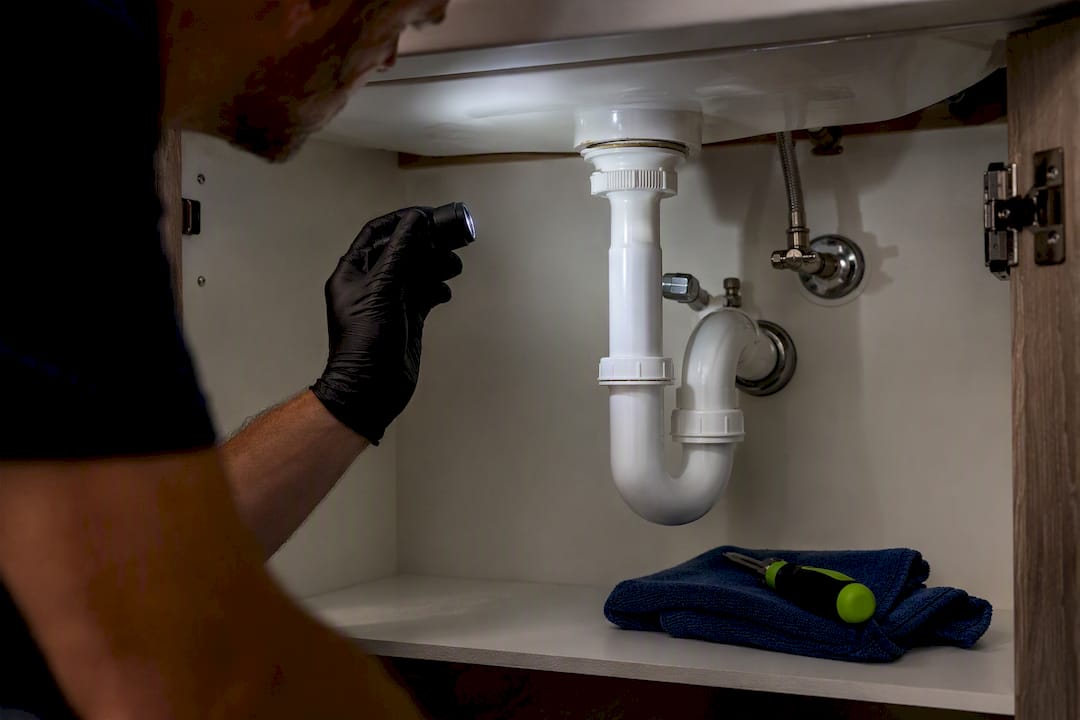
Every drain in your house, including the one under your sink and behind your toilet, relies on a small curve of standing water called a P-trap. That water blocks sewer gas from rising back into the room. When a fixture sits unused for weeks, that water evaporates, and the trap goes dry. A dry P-trap is the single most common cause of sewage smell from a toilet or drain in guest bathrooms, floor drains, and rarely used showers.
Clogs cause a different kind of odor. Hair, soap scum, and skin cells build a slimy layer called biofilm along the inside of drain pipes. That film rots slowly and throws off a musty, sour smell that lingers even when water drains fine. It is not sewer gas exactly, but it smells close enough that most homeowners can’t tell the difference without pulling the drain apart.
Plumbing vents cause smells in a less obvious way. Every drain system needs airflow to work right, and the vent stack running up through your roof is what supplies it. When a bird’s nest, leaves, or ice blocks that vent, air pressure inside the pipes gets thrown off. Gases that would normally exit through the roof get pushed back down into your fixtures instead. Blocked vents and partial sewer-line obstructions can sometimes force gas into living spaces, and weather often makes it worse. A gusty day or a heavy rain can change indoor pressure just enough to push a faint smell into something noticeable.
Toilets fail in their own particular way. The wax ring under the base seals the connection between the toilet and the drainpipe. Signs of trouble include:
A toilet that rocks or feels loose when you shift your weight on it
A ring of moisture or discoloration on the floor around the base
A smell that gets stronger right after you flush
Visible gaps in the caulk line around the toilet’s base
A cracked or compressed wax ring lets gas seep out with every flush instead of sealing it inside the pipe.
Sewer-line problems announce themselves more dramatically. If more than one fixture smells at once, if drains gurgle when you run water somewhere else in the house, or if water backs up into a tub or shower when you flush a toilet, you’re likely looking at a blockage or damage in the main line, not a single fixture issue.
Hidden leaks deserve a mention too. A slow leak inside a vanity cabinet or under a subfloor can trap moisture against wood and drywall, and the smell that results can mimic sewer gas closely enough to send you chasing the wrong fix for weeks.
One physical fact drives most of this: hydrogen sulfide, the gas behind that classic rotten-egg smell, only needs a tiny path back into your bathroom to be noticeable. A gap the width of a pencil around a dry trap or a cracked wax ring is enough.
How Do You Find the Source of a Sewer Smell?
Chasing a smell around a bathroom by nose alone wastes time. Work through it in order, and you’ll usually narrow the cause in under twenty minutes.
Start with a room-by-room sniff. Walk the bathroom with the door and window closed for a few minutes, then note exactly where the smell is strongest. A smell concentrated at one fixture points to that fixture; a smell that fills the whole room evenly points toward the vent system or the sewer line.
Fill every trap. Run water in the sink, shower, and any floor drain for 15 to 20 seconds each. If the smell fades noticeably within an hour, a dry trap was likely the culprit, and that’s a good sign you’ve found a simple fix.
Check the toilet. Grip the bowl at the base and rock it gently. Any movement, moisture, or gap in the caulk suggests a failing wax ring rather than a trap issue.
Listen for gurgling. Run the shower or sink and listen to the toilet, and vice versa. Gurgling in one fixture while another runs is a classic sign of a vent or drain-line obstruction, not a single bad seal.
Try a cup or cloth test. Hold a damp cloth or an upside-down cup near a suspected joint or drain opening for a minute, then smell it directly. This localizes faint odors better than sniffing open air in a room.
Stop DIY testing if you see sewage backup, water pooling around a drain, or the odor spreading to multiple rooms. That’s a system-level problem, and poking at it yourself risks making a bigger mess or exposing you to more gas than you should breathe.
Pro Tip: Keep a phone photo log as you test each fixture. Plumbers diagnose faster when you can show them exactly which drains you ran, in what order, and how the smell changed. It can shave real time off a diagnostic visit.
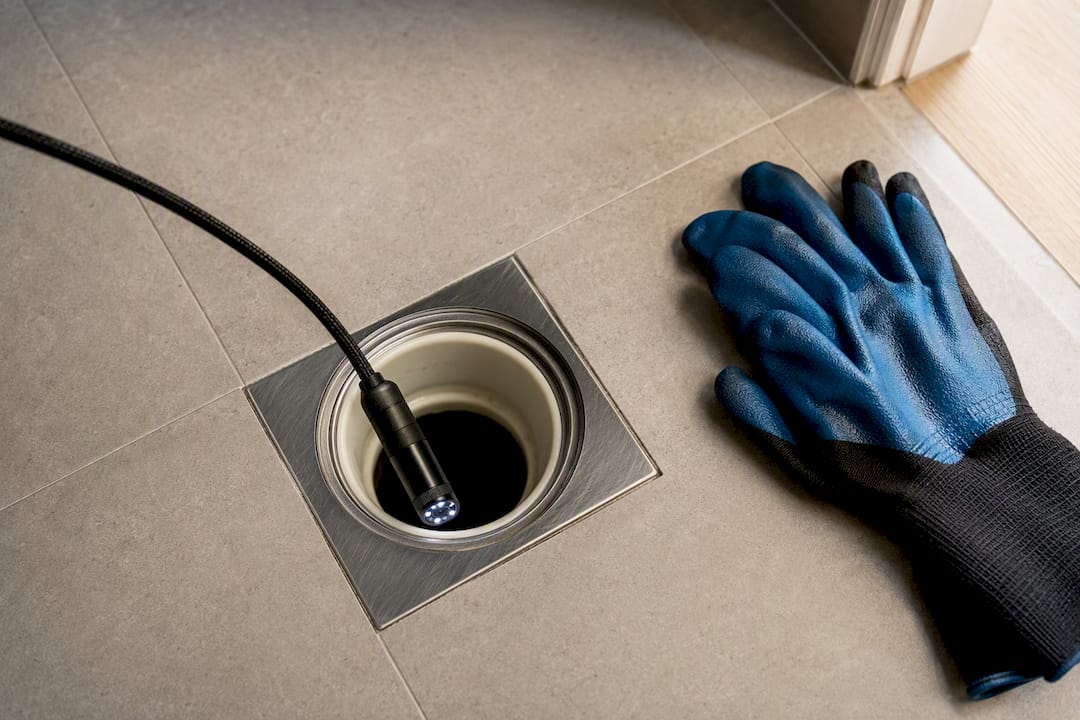
When homeowner testing doesn’t pin down the source, licensed plumbers move to smoke or pressure testing and camera inspections. A smoke test pushes nontoxic smoke into the vent system and watches where it escapes, which reveals cracks or breaks you’d never spot by eye. A camera inspection threads a small lens down the line to check for bellied pipe, root intrusion, or a main sewer line clog that’s changing pressure throughout the system. Technicians typically start with the simple checks first, trap refills, toilet stability, a flashlight down the drain, before reaching for cameras. It saves you from paying for equipment you don’t need.
What DIY Fixes Actually Work?
Not every sewer smell needs a plumber on day one. Some causes are genuinely simple to fix yourself, and others are traps for wasted effort.
Dry trap: Run water for 20 to 30 seconds in every affected fixture. For a floor drain or a trap that sits unused for long stretches (a vacation home, a rarely used basement bathroom), pour in a cup of mineral oil after filling it with water. The oil floats on top and slows evaporation for months. Skip regular RV antifreeze in traps unless it’s the non-toxic, propylene-glycol type rated for plumbing use, and never use it in anything connected to a drinking-water line.
Clogged drain with biofilm: A drain snake or mechanical auger physically removes hair and buildup that no chemical will fully dissolve. Enzyme-based cleaners break down organic buildup gradually without the risk that caustic drain cleaners carry to your pipes and your skin. Skip the bleach and heavy-duty chemical cleaners as a first move; they can damage older pipe joints and rarely reach the actual clog.
Minor vent blockage: If you can see leaves or debris at a vent opening from the ground with binoculars, that’s useful information for whoever inspects it. Climbing onto a roof to clear a vent yourself is not worth the fall risk. Leave vent-stack access to a professional with the right ladder and harness setup.
Failing wax ring: Tightening the toilet bolts might quiet a wobble for a week, but it does not restore a broken seal. Treat it as a temporary stopgap and plan for a proper reseal or replacement soon; a compressed or cracked wax ring will keep leaking gas until it’s actually replaced. Our toilet troubleshooting guide walks through the flange and seal checks in more detail.
Pro Tip: Air fresheners and scented plug-ins hide a smell for a few hours at best. They don’t fix a trap, a vent, or a seal, and relying on them just delays the actual repair while the underlying problem keeps going.
Sewer-line issues, hydrojetting needs, and anything requiring a camera inspection belong with a licensed plumber. These jobs need specialized equipment and often carry permit or code requirements that a homeowner fix can’t satisfy.
Is Sewer Gas Dangerous to Breathe?
Sewer gas isn’t just unpleasant, it can be genuinely hazardous. Hydrogen sulfide, the compound behind the rotten-egg smell, is both toxic and flammable, and OSHA warns that it irritates the nose, mouth, and throat at low levels and becomes severely hazardous at high concentrations. Methane, also present in sewer gas, adds a fire and explosion risk in enclosed spaces near any spark or open flame.
Watch for nausea, headaches, dizziness, or a burning feeling in your throat or eyes. Those symptoms, especially in more than one household member at once, mean you should ventilate immediately and get outside. Treat a sustained strong odor, visible sewage backing up into a tub or drain, or multiple people feeling sick as a signal to evacuate and call for emergency help, not just a plumber. Open windows, skip candles or lighters in the room, and keep kids and pets away until the space clears.
What Our Plumbers Check First
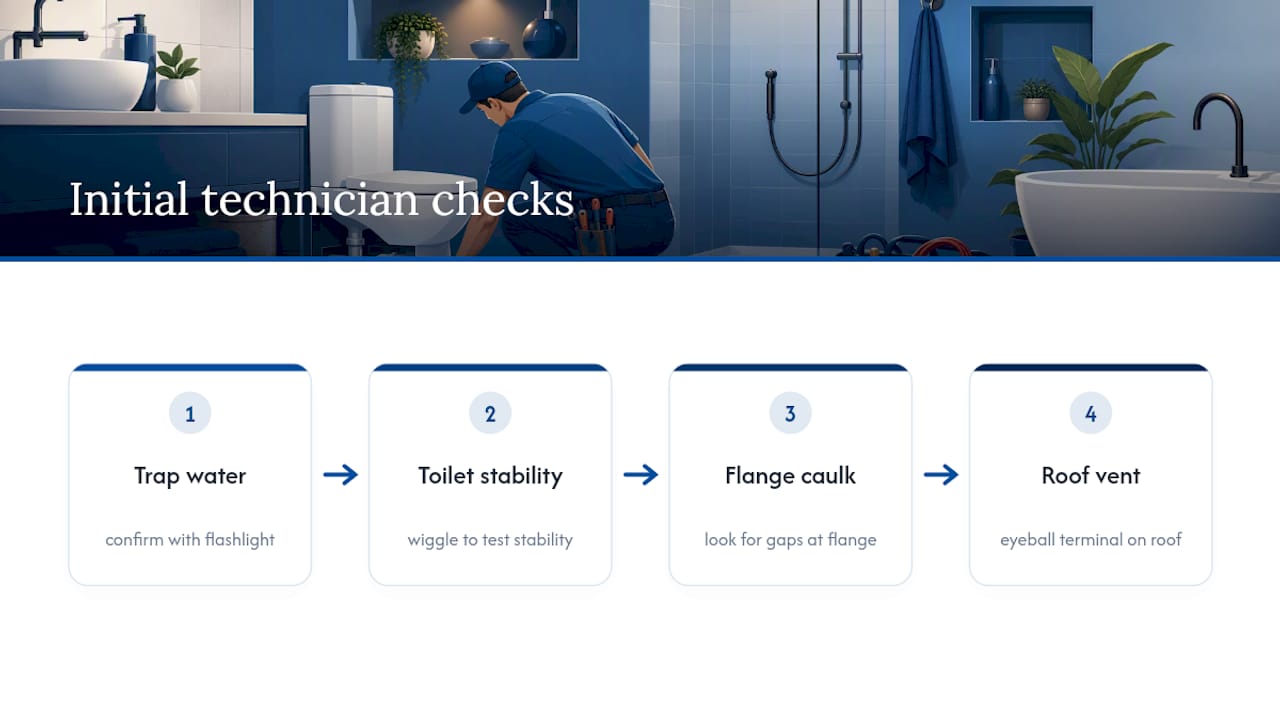
When a Texas Comfort Crew technician walks into a bathroom with a sewer complaint, the first few minutes look almost boring: check trap water levels with a flashlight, wiggle the toilet, look for caulk gaps at the flange, and step outside to eyeball the vent terminal on the roof. That sequence catches the majority of cases before any tool more complex than a flashlight comes out.
The biggest mistake we see is homeowners masking a smell with scented plug-ins or hitting a clog repeatedly with caustic drain cleaner. Both delay the real fix and, in the case of harsh chemicals, can damage older pipe joints in the process. Our approach favors repair over replacement whenever the fixture or line can genuinely be saved. That’s usually the cheaper, faster path and it’s the one we recommend first.
This section reflects the field experience of Dan Patino and the Texas Comfort Crew team, who evaluate hundreds of bathroom odor calls across the Greater San Antonio area each year.
A Technician’s Honest Take on Sewer Smells
Most sewer smells in a bathroom are not emergencies. They’re maintenance issues that got ignored for a few weeks too long. I’d rather see a homeowner run water through an unused drain once a month than call us in a panic over something a garden hose and twenty seconds would have fixed.
Where I get concerned is when someone’s been masking the smell instead of chasing it, spraying air freshener for a month while a wax ring slowly fails underneath. Document what you’re seeing. Snap a photo of moisture around the toilet base, note when the smell gets worse, and write down which fixtures you’ve already tested. That evidence gets you a faster, more accurate diagnosis and a fairer price, because we’re not starting from zero.
If the smell persists after basic checks, or if you see any sign of backup, don’t wait it out.
— Dan Patino
Getting Professional Help for a Persistent Sewer Smell
When trap refills, drain cleaning, and toilet checks don’t clear the smell, it’s time for a diagnostic visit rather than another round of guessing. Texas Comfort Crew handles the full range of what a stubborn bathroom odor might need: camera inspections to spot vent or line defects, trap and toilet reseals, and full sewer-line service when a blockage or break is the real cause.

Every visit should start with a straight answer and clear communication. Technicians walk you through what they find, give you an honest estimate, and recommend repair before replacement whenever the fixture or line can reasonably be saved. Customers often appreciate contractors who avoid unnecessary upsells.
If you’re dealing with a smell that won’t quit, or you’d rather have a professional confirm the cause before you start pulling pipes apart, our plumbing services page covers what a diagnostic visit includes and how to schedule one. Homeowners who want ongoing peace of mind against recurring drain and trap issues can also look into our maintenance membership plans, which include preventative inspections before small problems turn into bathroom-wide odor calls.
Sources
FAQ
Why does my bathroom smell like sewer but there’s no leak?
A dry P-trap is the usual answer. Water in the trap evaporates in rarely used drains, opening a direct path for sewer gas even though nothing is actually leaking.
How do I tell where a sewer smell is coming from?
Sniff room by room with the door closed, run water in each fixture to refill traps, and check the toilet base for wobble or moisture. A smell that fades after refilling traps points to a dry trap; a smell that stays put or fills the whole room points toward the vent or sewer line.
Is it safe to stay in a house that smells like sewer?
Mild, occasional odor from a single dry trap usually isn’t dangerous, but a strong, sustained smell, especially with gurgling or backup, warrants ventilating the space and calling a plumber right away. If multiple people feel sick, treat it as an emergency and get outside.
What are the first signs of sewer gas exposure?
Nausea, headache, dizziness, and irritation in the nose, mouth, or throat are common early symptoms tied to hydrogen sulfide exposure. Leave the room and ventilate immediately if you notice any of these.
Can Texas Comfort Crew fix a sewer smell that won’t go away?
Yes. Texas Comfort Crew diagnoses persistent bathroom odors with camera inspections and trap, toilet, and sewer-line repairs, and recommends the repair-first option whenever the fixture can be reasonably saved.
Recommended
Comments