
No Hot Water in the House? Here's What to Check First
If your water heater suddenly quit, the first move is simple: figure out whether the problem is housewide or just one faucet, then check power or gas supply before touching anything else. Most no hot water calls trace back to a tripped breaker, a dead pilot light, or a reset button that needs one press. If you smell gas or see standing water near the tank, stop reading the troubleshooting steps and handle the safety issue first.
Here’s your immediate checklist:
Run hot water at two or three different fixtures to see if the problem is whole-house or isolated to one tap.
Check your electrical panel for a tripped breaker and reset it once.
Locate the red reset button on an electric heater and press it firmly.
Give the tank some time to recover if it just ran through a full cycle.
Look for water pooling at the base of the tank before you do anything else.
Pro Tip: Smell gas near the water heater? Don’t flip switches or light anything. Leave the house, call your gas utility’s emergency line from outside, and let a professional take it from there.
Key Takeaways
Most no hot water problems trace back to a tripped breaker, a dead pilot, or sediment buildup, and identifying your fuel type first prevents wasted time and unsafe fixes.
Point | Details |
Test multiple fixtures first | Run hot water at two or three taps to confirm whole-house versus single-fixture failure before touching any component. |
Identify fuel type before acting | Electric, gas, and tankless units fail differently, and misdiagnosing the fuel wastes time or creates hazards. |
Know the hard stops | Gas odor, repeated breaker trips, active leaks, or burning smells mean stop troubleshooting and call a professional. |
Maintain annually | Flush sediment yearly, check the anode rod every three to five years, and keep the thermostat at 120°F. |
Repair-first diagnosis | Texas Comfort Crew evaluates the actual failure before recommending replacement, prioritizing repair when it’s the sound fix. |
Table of Contents
Safety First: Identify Your Water Heater Type Before You Troubleshoot
Every troubleshooting path splits based on fuel type, and guessing wrong wastes time or creates a hazard. A step-by-step diagnostic approach starts by naming the fuel source, because an electric unit and a gas unit fail in completely different ways.
Electric tanks have no vent pipe or flue, just an access panel or two on the side covering the thermostat and heating elements, plus a conduit running electrical wiring into the top. Gas tanks have a vent pipe or flue running up top, a burner compartment at the bottom, and a visible gas control valve with a pilot light window. Tankless units mount on a wall, run on gas or electric, and display error codes on a small screen instead of hiding everything behind a panel.
Before touching anything, run through this safety check:
Any rotten-egg smell near the unit means gas. Evacuate and call your gas utility immediately.
Rust, corrosion, or water stains near the base point to a leak, not a fuel problem.
A burning or melting-plastic smell means stop and call an electrician.
A breaker that trips again immediately after reset signals an electrical short, not a fluke.
Pro Tip: Never try to relight a “pilot light” on an electric water heater. There isn’t one. Misdiagnosing the fuel type is the fastest way to waste an hour on the wrong fix.
How Do You Fix an Electric Water Heater With No Hot Water?
Electric units fail for a handful of predictable reasons, and most of them are checkable without tools. Start by confirming whether every fixture in the house is cold or just one, and note how long it’s been since someone last ran a full tub or dishwasher cycle. A tank recovering from heavy use can take 30 to 60 minutes to reheat.
Check the dedicated breaker for the water heater and reset it once. If it’s a GFCI or double-pole breaker, make sure both switches are fully aligned, not just partially reset.
Remove the upper access panel (turn off power first) and locate the ECO (emergency cutoff) reset button, usually a small red button near the upper thermostat.
Press the reset button firmly until you hear or feel a click.
Restore power and check the thermostat setting; 120°F is the recommended target for both safety and efficiency.
Wait 45 to 60 minutes and test hot water again before assuming failure.
Watch for these stopping points:
The breaker trips again right after reset. That points to a shorted heating element, and continued resets at that stage risk further electrical damage.
You smell burning near the panel.
The ECO button trips repeatedly even after resetting once.
Element continuity testing requires a multimeter and comfort working near live wiring. If you’re not confident doing that safely, that’s an electrician’s job, not a weekend project.
How Do You Fix a Gas Water Heater With No Hot Water?
Gas failures usually come down to three culprits: a pilot that’s gone out, a bad thermocouple, or a gas supply interruption. Before you assume the heater is at fault, check whether your stove or furnace is also losing gas. That tells you if the problem is the unit or the supply line.
Check other gas appliances in the house. If they’re all out too, the issue is your gas supply, not the water heater.
Look through the sight glass or access door for the pilot flame. No flame means it’s out.
If there’s no gas odor, follow the relight instructions printed on the unit’s label exactly, including the wait time before ignition.
Confirm the gas valve is turned to the “on” position, not “pilot” or “off.”
If the pilot lights but won’t stay lit, the thermocouple is likely failing and needs replacement.
Check that the combustion air intake and exterior vent aren’t blocked by debris, insulation, or a bird’s nest.
Safety rules that override everything else:
Smell gas at any point? Don’t attempt to relight anything. Evacuate and call your gas utility.
Never try to repair or adjust the gas control valve yourself. That’s a licensed technician’s job.
A pilot that won’t hold flame after one relight attempt usually means a part failure, not user error.
Troubleshooting a Tankless Water Heater With No Hot Water
Tankless units are more diagnostic-friendly than tanks because they display error codes right on the unit. Check the screen first. A code referencing ignition failure, flame loss, or venting usually points to a blocked air intake or exhaust vent, both common after a storm or a nest-building bird moves in nearby.
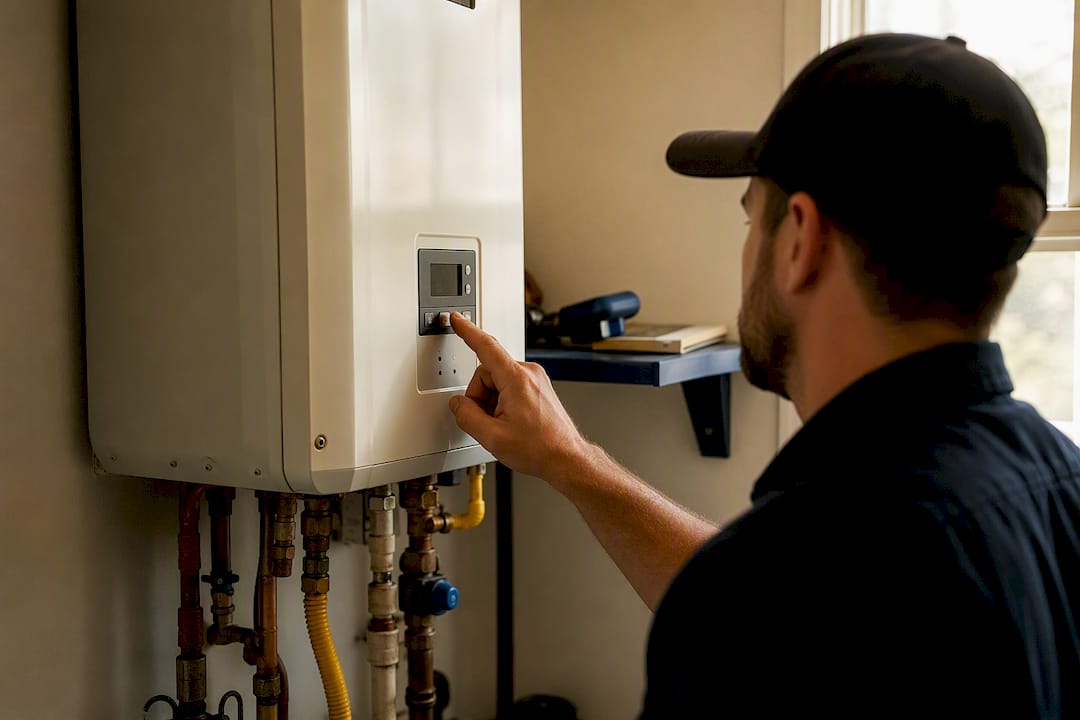
Power-cycle the unit by switching it off at the breaker or unplugging it for 60 seconds, then restarting. That clears minor lockouts on its own. If the same code returns, the problem is mechanical, not electronic.
Mineral scaling is the other frequent cause, especially in hard-water areas. Scale buildup on the heat exchanger reduces flow sensing and can trigger error codes that mimic a bigger failure. Manufacturer and industry guidance generally recommends descaling annually in hard-water regions.
Persistent error codes after a power cycle mean it’s time to call a technician.
Repeated lockouts on the same code point to a hardware fault, not a fluke.
Suspected venting damage should never be diagnosed by opening panels yourself.
Pro Tip: Photograph the error code on your tankless display before resetting it. If it doesn’t hold, that code is the fastest way for a technician to diagnose the issue over the phone.
Could the Problem Be Something Other Than the Heater?
Not every cold shower is the heater’s fault. If only one faucet runs cold while others work fine, check that fixture’s cartridge or mixing valve before touching the tank. A clogged aerator can also mimic a temperature problem.
One fixture only? Suspect a failing mixing valve or clogged aerator, not the heater itself.
Sudden hot-then-cold within a single shower suggests a failed dip tube mixing cold water into the hot outlet, while gradual weakening points to sediment.
A closed or partially closed shutoff valve near the tank restricts hot water flow house-wide.
Frozen exposed pipes in winter, or simply running more hot water than an undersized tank can supply during peak use, both look like a broken heater but aren’t.
When Should You Call a Plumber Instead of Troubleshooting Further?
Some symptoms mean stop immediately and schedule a professional rather than keep testing. A breaker that trips the instant you reset it, any gas smell, active water pooling at the tank base, or a burning odor all fall into that category. So does a tank older than 10 to 15 years showing rust or corrosion at the fittings.
When a technician arrives, expect them to test heating element continuity, thermostat function, the gas control valve and thermocouple assembly, venting clearance, the temperature and pressure relief valve, and the anode rod’s condition for corrosion.
Repair costs and timing vary by the failed part:
A heating element or thermostat swap is usually a same-day fix.
A faulty thermocouple or pilot control assembly typically gets resolved in one visit.
Full tank replacement, especially with code-required updates to venting or connections, often runs into a next-day job depending on parts availability.
Field data suggests many service calls resolve with a quick reset or a sediment flush instead of a full replacement, so don’t assume the worst before a technician looks at it.
Simple Maintenance That Prevents the Next No Hot Water Call
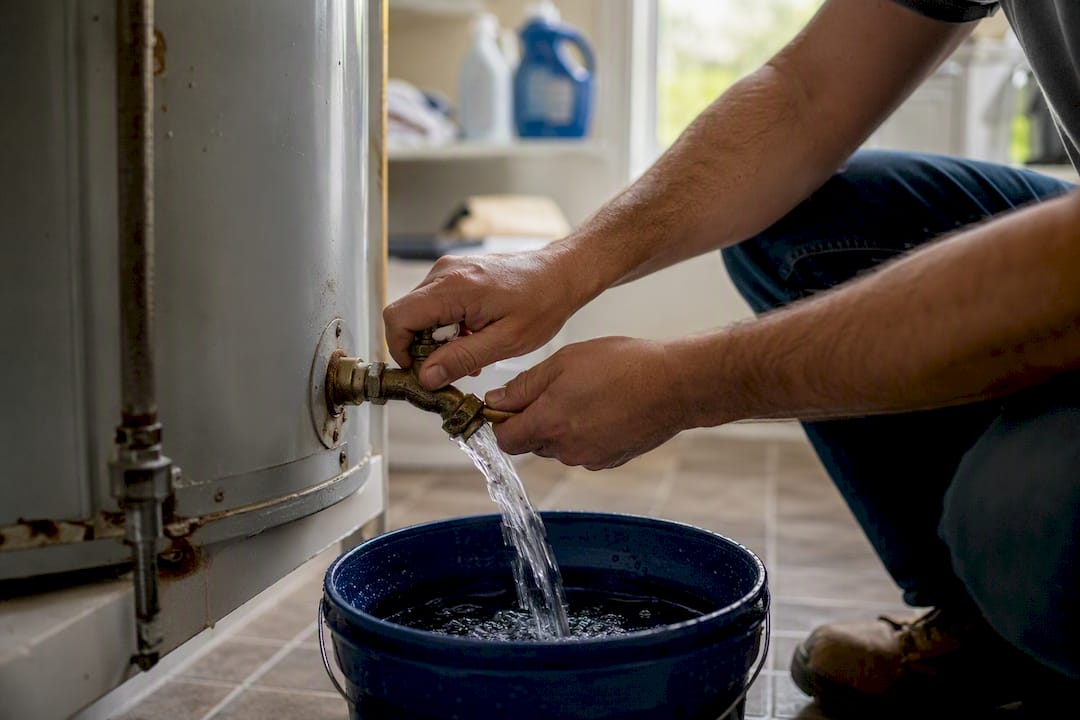
A little upkeep goes a long way toward avoiding repeat failures. Flush your tank annually, more often if you’re on hard water, to clear sediment that insulates the burner or elements and forces them to work harder. Check the anode rod every three to five years since a corroded rod lets the tank itself start rusting from the inside.
Keep the thermostat at 120°F. That setting balances scald safety with efficient recovery, per Energy.gov’s guidance. Tankless owners in hard-water areas should plan on descaling once a year. A maintenance membership that bundles these checks on a schedule catches small problems before they become no-hot-water emergencies.
Common Mistakes Homeowners Make When Troubleshooting
The most common misstep is testing the wrong fuel path entirely, like trying to relight a pilot on an electric unit. Second is repeatedly resetting a breaker or pilot when the underlying fault hasn’t changed, which risks compounding electrical damage instead of fixing anything.
Assuming a tank with no visible puddle can’t be leaking internally.
Skipping the multi-fixture test and jumping straight to element replacement.
Pro Tip: Test three faucets before you touch a single component. It takes 30 seconds and tells you whether you’re chasing a heater problem or a fixture problem.
What Most Service Calls Actually Reveal
Most calls I hear about turn out to be a tripped ECO button, a dead thermocouple, or sediment nobody flushed in years, not a dying tank. Before your technician arrives, jot down when the problem started and snap a photo of the unit’s nameplate. That single step often cuts diagnostic time in half.
Get Your Hot Water Back Without Guesswork
Texas Comfort Crew handles the full range of water heater problems: element and thermostat swaps, gas control and thermocouple repairs, tankless descaling, and full tank replacements when repair no longer makes sense. Unlike a call that jumps straight to “you need a new unit,” the team evaluates the actual failure first and repairs whenever that’s the sound option, which keeps a fixable $200 part from turning into an unnecessary $1,500 replacement.

Before your visit, have a photo of the heater’s nameplate ready along with a quick timeline of when the hot water stopped and what you’ve already tried. That alone speeds up the diagnosis. If you’re in the Spring Branch area, you can check availability and schedule a water heater diagnosis directly, or browse the full plumbing services page to see everything covered before booking.
Sources
For deeper reference beyond this guide, these sources cover the technical and safety details in more depth:
FAQ
Why Would I Suddenly Have No Hot Water?
Sudden total loss usually means a tripped breaker, a blown thermocouple, or an ECO reset button that’s been triggered, all of which cut power or gas to the heating source instantly rather than gradually.
What’s the First Thing to Check When There’s No Hot Water?
Test hot water at two or three different fixtures first to confirm whether the problem is whole-house or isolated, then check your breaker panel or gas supply before assuming a part has failed.
How Do I Reset My Hot Water Heater?
On an electric unit, cut power, open the access panel, and press the red ECO reset button firmly; on a gas unit, follow the relight instructions on the unit’s label exactly, and never attempt it if you smell gas.
Why Is My Hot Water Not Coming Out but My Cold Water Is?
This almost always points to the heating element, thermostat, pilot, or gas supply failing while the cold-water line, which bypasses the tank entirely, keeps working normally.
Can Texas Comfort Crew Fix My Water Heater the Same Day?
Common repairs like a heating element, thermostat, or thermocouple swap are often same-day fixes, while full tank replacement can take longer depending on parts and code requirements. Check your local service area for availability.
Recommended
Comments