
When a $100–$350 HVAC Maintenance Plan Pays for San Antonio Homeowners
A maintenance plan pays off for homeowners with older equipment, heat pumps, extreme weather exposure, or vulnerable occupants like infants or elderly residents. It’s a weaker bet for newer systems still under a manufacturer warranty or for confident DIYers willing to self-insure. Most plans run $100 to $350 a year, and the real question isn’t whether maintenance helps (it does) but whether you’re better off paying a contractor annually or setting that money aside for repairs yourself.
TL;DR:
Maintenance plans are more valuable for older systems, heat pumps requiring two visits a year, or households with vulnerable occupants than for new units under warranty.
Plans typically cost between $150 and $350 annually, but exclusions like compressor or coil repairs often limit their coverage for significant repairs.
Documented maintenance helps preserve manufacturer warranties and minimally improves energy efficiency, but it rarely covers major components or guarantees priority service during extreme weather.
For newer systems under warranty, self-insuring through a repair fund and performing DIY upkeep can be more cost-effective than a maintenance plan.
Carefully review contract exclusions, caps, and cancellation policies before signing, as the real value depends on knowing what repairs are actually covered.
Table of Contents
Is an HVAC Maintenance Plan Worth It? What’s Included and What It Costs
The honest answer to “hvac maintenance plan worth it” depends less on the plan itself and more on what’s actually printed in the contract. Most residential agreements bundle the same core services, but the fine print on exclusions and caps is where value gets made or lost.
A standard visit typically covers:
A full system tune-up, including checking refrigerant pressure and electrical connections
Filter inspection and replacement (or a reminder schedule if you supply your own)
Thermostat calibration and safety checks
Condensate drain clearing to prevent water damage and mold
Blower motor and coil inspection, though deep cleaning is often billed separately
Carbon monoxide and gas line safety checks on furnace units
ENERGY STAR points to dirt and neglect as leading causes of HVAC failure, and its guidance recommends annual pre-season checkups paired with monthly filter inspections as the baseline maintenance routine. That’s essentially what a decent plan formalizes: someone else remembering to do it on schedule.
Beyond the core visit, plans usually come with perks that sound better than they perform in practice. Priority scheduling during peak season, discounts on parts and labor for repairs, and waived diagnostic fees are the standard sweeteners. Some contractors also offer add-ons like coil cleaning or filter delivery, usually at extra cost, since these are frequently carved out of the base plan.
Pricing swings on a handful of factors. Trane’s overview of maintenance plans puts typical annual costs in the $150 to $350 range for plans covering one or two tune-ups, though Texas Comfort Crew has seen quotes across the Greater San Antonio market land anywhere from $100 on the low end to north of $500 for multi-unit homes with heat pumps needing twice-yearly service. The biggest cost drivers:
System age: older units often need more attention per visit, which some contractors price into the plan
Equipment type: heat pumps generally need two visits a year instead of one, since they run in both heating and cooling modes
Number of units: multi-zone homes or properties with a separate unit for an addition pay more per address
Local labor rates: San Antonio pricing differs from national averages, and rural service calls sometimes carry a trip fee
Visit frequency: a single annual tune-up costs less than a spring and fall package
One detail a lot of homeowners miss: several manufacturer warranties require documented annual maintenance from a licensed technician to stay valid. If a compressor fails at year six and you can’t produce service records, the manufacturer can deny the claim, warranty or not. A maintenance plan that generates paperwork automatically solves that problem. Skipping maintenance to save $200 a year and then losing a $3,000 warranty claim over missing paperwork is the kind of expensive mistake this plan is designed to prevent.
Does HVAC Maintenance Actually Save You Money?
The pitch behind every plan is simple: pay a little now, avoid paying a lot later. That’s true often enough to matter, but the math isn’t as clean as sales literature suggests.
What you’re actually buying:
Lower risk of a mid-summer or mid-winter system failure caused by dirt buildup or a worn part nobody caught in time
A documented maintenance history that satisfies manufacturer warranty requirements
Slightly better energy efficiency, since a clean, properly calibrated system uses less electricity to hit the same temperature
A modest hedge against the biggest repair bills, though only for the specific issues the plan actually covers
What it doesn’t reliably buy:
Coverage for the expensive stuff. Compressor failures and heat exchanger replacements, the two priciest common repairs, are frequently excluded or capped well below the actual repair cost
Guaranteed fast service. Complaints about long waits despite paying for a plan show up regularly, meaning priority scheduling isn’t always priority in practice
A clear win on price. Annual contract costs for maintenance-and-repair plans vary widely, sometimes ranging from under $150 to more than $500 for what looks like a similar scope of work, according to Checkbook’s consumer analysis
The gap that trips people up: coil cleaning is one of the most commonly assumed inclusions and one of the most commonly excluded services in “maintenance only” plans. If dirty coils are driving up your energy bills, a plan that skips coil cleaning isn’t solving the problem you bought it for.
Run the numbers on two realistic households. A newer AC unit, five years old, under full manufacturer warranty, in a moderate climate: annual plan cost of $250 times five years is $1,250 spent on a system that’s statistically unlikely to need a major repair in that window anyway. Compare that to a 12 year old system in a high-use San Antonio home running near constant from May through September: the same $1,250 over five years looks a lot more reasonable against a realistic chance of a capacitor, contactor, or blower motor failure, each of which can run $200 to $600 in parts and labor if it happens outside a plan.
The energy-savings argument is real but modest. ENERGY STAR’s guidance ties consistent filter changes and pre-season checkups to better system efficiency, which shows up as a smaller number on your utility bill rather than a dramatic one. Don’t buy a plan expecting it to pay for itself in electricity savings alone. That’s rarely how the math works.
Priority scheduling is the perk most oversold and most situational. During a normal week, it barely matters, since most contractors can get to non emergency calls within a day or two regardless. During a February freeze or a July heat dome, when every HVAC company in the region is buried in same-day calls, being a plan member with a documented service history can genuinely move you up the queue. If you live somewhere with real weather extremes, that’s worth something. If you live somewhere mild, it’s a perk you’ll rarely cash in.
The pattern that emerges from consumer complaints isn’t that plans are scams. It’s that the value is uneven, sometimes real, sometimes marketing, and almost entirely dependent on what’s excluded from the contract you signed.
Do You Need an HVAC Maintenance Plan? A Quick Checklist
Answering “is a maintenance plan worth it” for your specific house takes about five minutes if you run through the right questions in order.
How old is your system? Units under five years, still covered by a comprehensive manufacturer warranty, generally need less insurance against big repair bills. Units past the seven to ten year mark start entering the window where major components commonly fail.
How extreme is your climate exposure? If your system runs nearly year round, like most San Antonio area homes do between spring humidity and summer heat, wear accumulates faster and catching small issues early matters more.
Does anyone in your home depend on stable indoor temperature for health reasons? Infants, elderly residents, or anyone with a respiratory condition changes the risk calculus. A failed system in July isn’t just inconvenient in that case, it’s a real safety issue.
Are you comfortable doing basic upkeep yourself? If you already change filters monthly and know how to clear debris from an outdoor condenser unit, you’re covering a chunk of what a plan offers anyway.
How long do you plan to own this home? If you’re selling in two years, the long-term maintenance benefits matter less than they would if you’re staying for a decade.
What does your current warranty actually require? Some manufacturer warranties mandate documented professional maintenance. Read the fine print before assuming you’re covered either way.
Run a simple break-even exercise once you’ve answered those. Multiply your plan’s annual cost by the number of years you expect to own the system, then compare that total against the realistic odds and cost of the repairs a plan would actually cover. CBS News’ breakdown of extended warranty value suggests modeling specific likely repairs, capacitors, contactors, fan motors, against the plan’s coverage caps rather than assuming the plan covers “everything.”
Pro Tip: If your system is a heat pump, budget for two visits a year rather than one. Heat pumps run in both heating and cooling seasons, which means twice the wear cycle and twice the reason to catch small problems before they become compressor-level repairs.
Prioritize a plan without much hesitation if you’re dealing with a system past year ten, a heat pump, a household with a health-vulnerable occupant, or a home in a region prone to grid strain during extreme weather. Everyone else has a real choice to make, not an obvious one.
How to Evaluate an HVAC Maintenance Plan Before You Sign
Comparing two plans side by side only works if you’re actually comparing the same things, and most contracts are written to make that harder than it should be.
Before signing anything, get clear answers on these contract items:
Exactly what’s included per visit: ask for a written list, not a verbal summary. “Full inspection” means different things to different companies.
Parts versus labor coverage: some plans discount labor but charge full price for parts, which erases most of the savings on an actual repair.
Specific exclusions: compressor and heat exchanger repairs are the two to ask about directly, since these tend to be excluded or capped in the majority of consumer plans.
Caps and deductibles: a plan that caps payouts at $300 isn’t much help against a $1,200 blower motor replacement.
Diagnostic fee policy: many plans waive the standard diagnostic fee for members, which is a real and easy-to-verify savings.
Transferability: if you sell the house, does the plan transfer to the new owner or die with the sale?
Cancellation terms: month-to-month flexibility versus a locked annual contract with an early termination fee.
Response-time guarantees: get this in writing if priority scheduling is part of the sales pitch. A verbal promise isn’t a guarantee.
A short script helps here. Ask directly: “What repairs are excluded from this plan?” A contractor who answers specifically, naming compressors, heat exchangers, or refrigerant line replacements, is being straight with you. A contractor who says “don’t worry, we cover you” without naming exclusions is worth a second look.
Pro Tip: Ask for the plan’s fine print in writing before you commit, and read the exclusions section twice. The same-sounding plan from two different contractors can carry wildly different out-of-pocket risk, and the difference is almost always buried in that section.
Watch for a few specific red flags. Mandatory repeat repairs, where every visit somehow uncovers a new “urgent” fix, is a classic upsell pattern. Vague language like “comprehensive coverage” with no itemized list is a sign the contract is designed to be interpreted in the company’s favor later. And payout caps set well below the typical cost of common repairs mean you’re paying for a plan that can’t actually cover the thing you’re most worried about. If a technician’s findings don’t match what you’re seeing or feeling in the house, getting a second opinion before authorizing extra work is a reasonable, normal step, not an insult to the contractor.
Alternatives to a Maintenance Plan Worth Considering
A plan isn’t the only path to a reliable system. Depending on your situation, one of these alternatives might make more sense.
Self-insuring with a repair fund is the most direct alternative. Set aside what you’d spend on a plan, roughly $150 to $350 a year, into a dedicated account and pay for repairs as they come up. This works best for newer systems with lower failure odds, where the math often favors saving over prepaying. A Forbes Home analysis of maintenance plan value points out that a well-funded repair reserve, paired with one professional tune-up a year, frequently matches or beats what a plan delivers, without the exclusions.
DIY upkeep covers more ground than most homeowners realize:
Changing filters every one to three months depending on usage and pet presence
Clearing leaves, grass clippings, and debris from around the outdoor condenser unit
Checking that vents and returns aren’t blocked by furniture or rugs
Testing the thermostat and replacing batteries before each season
Manufacturer and extended warranties overlap with maintenance plans more than people expect. If your system is still under a comprehensive manufacturer warranty, an extended warranty or dealer protection plan may be duplicating coverage you already have. CBS News found that extended warranties can carry the same exclusions and payout caps that make basic maintenance plans a mixed bag, so read both documents before stacking coverage.
A workable hybrid: one professional tune-up per year plus a repair fund for anything under seven years old, then add a full maintenance plan once the system crosses the seven to ten year mark where failure risk climbs.
What Maintenance Actually Looks Like on the Ground
Numbers on a page only tell part of the story. Here’s what tends to play out in real houses.
Some contractors have documented cases where a routine tune-up catches a failing capacitor or a refrigerant leak weeks before it would have taken down the compressor entirely, the single most expensive component in most systems. That’s maintenance working exactly as intended: a small, cheap fix instead of a full compressor replacement running well into four figures.
The flip side happens too. A homeowner on a maintenance plan for three years still ended up paying out of pocket for a coil replacement, because coil work fell under the plan’s exclusions list rather than its covered services. The plan wasn’t fraudulent. The homeowner just hadn’t read closely enough to know coil cleaning and coil repair are often billed separately from routine maintenance visits.
During a proper tune-up, expect a technician to walk you through refrigerant levels, electrical connections, condensate drainage, and airflow before touching anything. A documented maintenance checklist gives you a paper trail to compare against future visits, which matters both for warranty claims and for catching a technician who’s rushing through the list.
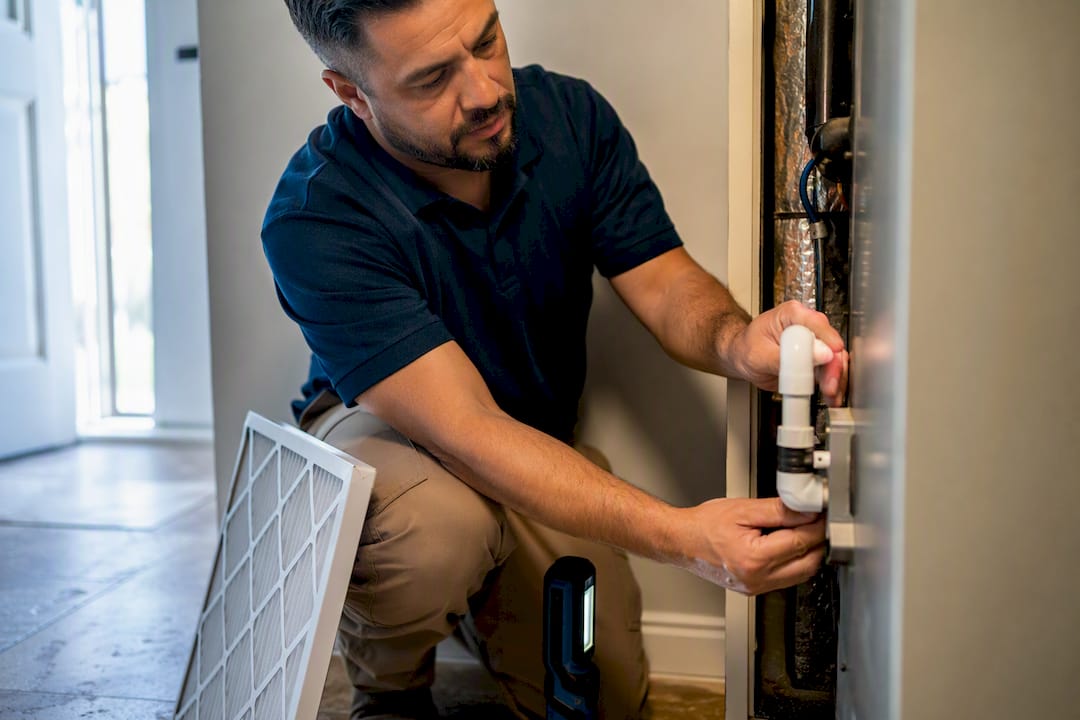
If a tech recommends a repair mid-visit, ask for a written quote and a plain-language explanation of urgency before agreeing to anything. Reputable contractors document their findings and explain the reasoning rather than pressuring same-day approval. That single habit, insisting on documentation before authorization, is the fastest way to tell a trustworthy technician from one working on commission.
Can You Bundle HVAC Maintenance With Other Home Services?
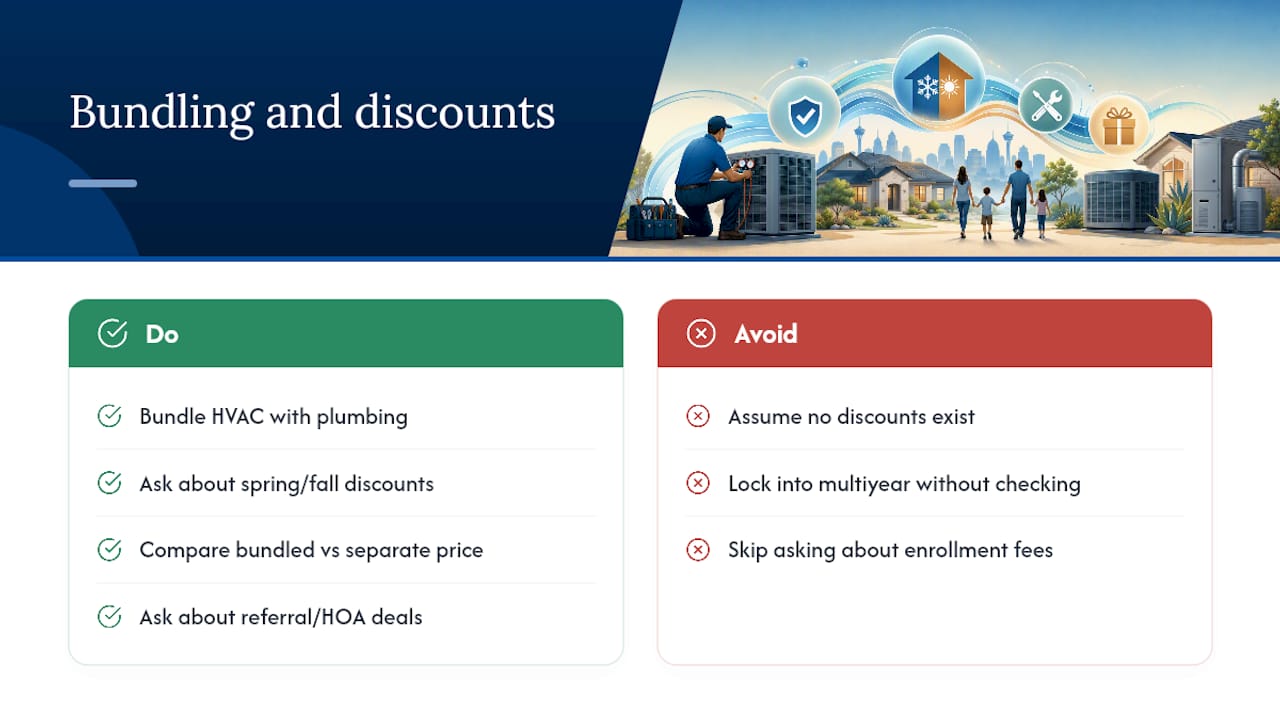
Many local contractors offer bundled pricing when maintenance plans cover more than one system in the home. Bundling an HVAC plan with plumbing maintenance, for example, an annual water heater check or drain inspection, can lower the effective per-service cost since the contractor is already on-site and scheduling a single visit covers more ground.
Seasonal discounts show up often around the shoulder seasons, spring and fall, when demand for tune-ups dips before the next heating or cooling season ramps up. Signing up during these windows sometimes gets you a lower first-year rate or a waived enrollment fee.
Multi-year commitments occasionally unlock a discount over paying annually, though that trade-off cuts against the flexibility argument covered in the next section. If a contractor offers both plumbing and HVAC service, as many full-service local companies do, ask directly whether bundling both into one membership reduces the combined price versus paying for each separately. It often does, since the company is saving on scheduling and overhead either way.
Referral discounts and neighborhood or homeowners’ association partnerships pop up in some markets too, worth asking about directly rather than assuming they don’t exist.
What Happens If You Want to Cancel Your Plan?
Contract length and cancellation terms deserve as much scrutiny as price. A plan locked into a 12 month or multi-year commitment with an early termination fee limits your ability to walk away if service quality slips or your situation changes, like selling the house or replacing the system entirely.
Month-to-month plans cost more per year in some cases but give you the freedom to cancel without penalty if the contractor isn’t delivering. That flexibility has real value, especially in your first year with a new company, before you know whether their service matches their sales pitch.
Ask specifically what happens to unused prepaid visits if you cancel mid-term. Some contracts prorate a refund, others simply forfeit the remaining balance, which turns an annual plan into a bigger loss than the sticker price suggests if you cancel in month four. Also confirm whether the plan transfers to a new homeowner if you sell, since a non-transferable plan effectively expires the moment you move, regardless of how much term is left on the contract.
A Local Contractor’s Honest Take
The most common mistake homeowners make isn’t buying a plan or skipping one. It’s signing a contract without reading the exclusions section, then feeling burned later when a real repair isn’t covered the way they assumed. The plan itself is rarely the problem. The mismatch between what someone expected and what was actually printed in the contract is.
For a system past the seven to ten year mark, in a climate that runs the equipment hard, or in a household where a broken system is a safety issue rather than an inconvenience, paying for documented, scheduled maintenance is the more sensible bet more often than not. For a newer system under warranty with an owner willing to change filters and clear debris around the condenser, self-insuring into a repair fund frequently makes more financial sense. Texas Comfort Crew’s approach favors repair over unnecessary replacement and transparent explanations over pressure tactics, and that philosophy applies just as much to maintenance decisions as it does to repair calls. Read the contract twice, ask about exclusions by name, and pick a contractor willing to put findings in writing before asking for your approval.
— Dan Patino
Get Straightforward HVAC Maintenance in the San Antonio Area
Most maintenance plans fail homeowners in the fine print, not the pitch. Some membership programs are built around clear, itemized inclusions, transparent annual pricing with no hidden caps buried in page four, and technicians who document findings and explain urgency before recommending any extra work.

Response time matters more than most homeowners realize until they’re standing in a 95 degree living room waiting on a callback. Local presence in the Greater San Antonio area can contribute to faster scheduling during peak demand periods, and technicians familiar with the region’s heat and humidity may better understand how these conditions affect system wear compared to milder climates. If a repair does come up mid-visit, you get an honest explanation and a written quote first, not a surprise on the invoice.
Check whether your home falls within the Texas Comfort Crew service area, including Stone Oak, New Braunfels, and Schertz, and request a maintenance plan quote that spells out exactly what’s included, what’s excluded, and what it costs before you sign anything.
Sources
The maintenance guidance in this article draws on ENERGY STAR’s HVAC efficiency recommendations, Checkbook’s consumer analysis of maintenance contracts, Trane’s overview of what maintenance plans typically include, CBS News’ breakdown of extended warranty value, and Forbes Home’s decision framework for maintenance plan shoppers.
For more on what a tune-up should include, read Texas Comfort Crew’s guide to what’s in a maintenance plan, and for pricing context on repair calls, see the breakdown of diagnostic fees. Homeowners weighing a big repair recommendation should also read about getting a second opinion and the signs a contractor is trustworthy.
FAQ
Do You Really Need Annual HVAC Maintenance?
Annual maintenance isn’t legally required, but skipping it raises your risk of a preventable failure and can void manufacturer warranties that require documented service history.
What Is the $5,000 Rule for HVAC Systems?
It’s a rule of thumb some contractors use to decide between repair and replacement based on multiplying the repair cost by the system’s age, and if that number exceeds a high threshold, replacement often makes more financial sense than another repair.
Is a Maintenance Plan Worth It for an Older System?
Yes, generally. Systems past seven to ten years old face higher failure odds, and preventive maintenance tends to pay off most on older units or in demanding climates, where catching small issues early avoids expensive breakdowns.
Will HVAC Prices Go Down in 2026?
There’s no reliable public forecast showing HVAC equipment or service prices dropping in the near future; labor and parts costs have generally trended upward, so budgeting for stable or slightly rising costs is the safer assumption.
What’s Usually Excluded From an HVAC Maintenance Plan?
Compressor failures, heat exchanger replacements, and often coil cleaning are the most commonly excluded or capped items, even though many homeowners assume they’re covered.
Recommended
Comments