
HVAC Maintenance Plan: What Homeowners Should Know
An HVAC maintenance plan is a recurring service agreement that covers seasonal professional tune-ups for your heating and cooling system, usually paired with member perks like priority scheduling and parts discounts. For most homeowners, it pays for itself by cutting repair frequency and keeping energy bills lower. Expect to pay somewhere between $150 and $500 a year depending on the provider and plan tier, and expect two visits: one in spring for your air conditioner, one in fall for your furnace.
Typical cost: $150 to $500 annually, or $75 to $350 per single visit
Recommended frequency: Twice a year, spring and fall
What it protects: Compressor life, furnace heat exchanger, warranty compliance
Industry pricing data from HVAC Base puts the return on investment for a properly maintained system between 3:1 and 5:1, driven mostly by avoided emergency repairs and lower energy use.
Key Takeaways
A well-structured HVAC maintenance plan costs $150 to $500 a year, covers two seasonal tune-ups, and typically returns 3 to 5 times its cost through energy savings and avoided repairs.
Point | Details |
Twice-yearly scheduling | Book cooling tune-ups in spring and heating tune-ups in fall to avoid peak-season delays. |
Realistic cost range | Expect $150 to $500 annually for a bundled plan, or $75 to $350 per single visit. |
Read the exclusions | Major component replacement, duct work, and after-hours service are commonly billed separately. |
Verify the tune-up quality | A thorough visit takes 45 to 90 minutes and includes a written or photo-based inspection report. |
Texas Comfort Crew membership | Offers seasonal tune-ups, priority scheduling, and parts discounts through a repairs-first, transparent contract. |
Table of Contents
What Does an HVAC Maintenance Plan Include?
A real tune-up is not a five-minute filter swap. ENERGY STAR’s maintenance checklist calls for a pre-season professional check-up that covers the thermostat, electrical connections, coils, and condensate drain, plus monthly filter attention from the homeowner in between visits.
A competent technician working from that standard should check:
Thermostat calibration and settings
Electrical connections, tightening any loose terminals
Evaporator and condenser coil cleaning
Refrigerant charge and pressure levels
Condensate drain line flushing to prevent clogs and water damage
Combustion and carbon monoxide testing on gas furnaces
Blower motor and belt inspection
Some plans bundle in extras like indoor air quality checks, discounted filter replacements, or priority booking during peak weather. Others charge separately for those add-ons, so ask before you sign. Between visits, you still carry responsibility for two things: changing filters monthly (more often if you have pets) and keeping at least two feet of clearance around your outdoor condenser unit. Skip those two habits and even the best professional tune-up loses ground fast.
When Should You Schedule HVAC Maintenance?
Book your air conditioner tune-up in March or April, before the first heat wave hits. Book your furnace check in September or October, ahead of the season’s first cold snap. HVAC Base’s seasonal demand data shows that scheduling in these shoulder months means shorter wait times, better technician availability, and time to order parts if the inspection turns up a problem.
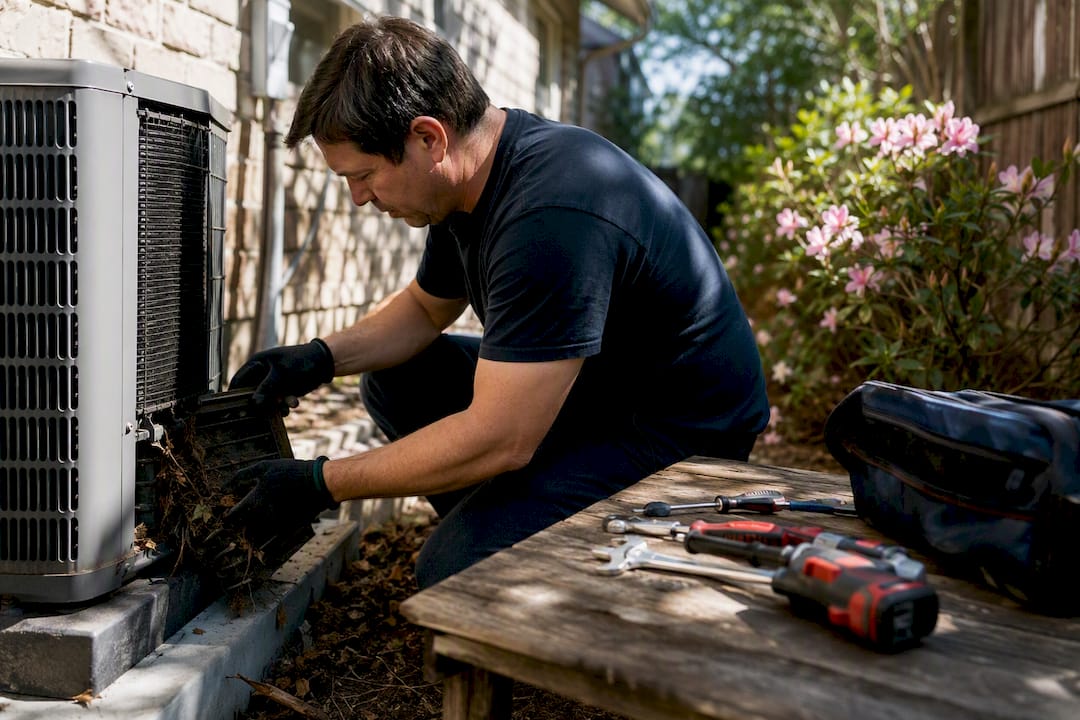
Most contractors recommend two visits a year for combined heating and cooling systems, one per season, rather than a single annual check.
Pro Tip: Set your maintenance reminders around the twice-yearly clock changes in March and November. It’s an easy mental anchor, and it lines up almost perfectly with the ideal booking windows for cooling and heating season.
How Much Does an HVAC Maintenance Plan Cost?
A single maintenance visit typically runs $100 to $350, according to Today’s Homeowner, while a bundled annual service contract covering both seasonal visits commonly lands between $150 and $500 depending on the plan tier. HVAC Base puts average per-visit tune-up pricing closer to $75 to $200, with annual plans in the $150 to $350 range.
Several factors move that number up or down:
System type and age: Older furnaces and oil-fired equipment cost more to service than newer split systems, per Today’s Homeowner’s cost data.
Home size: Larger homes with bigger systems or multiple zones take longer to inspect.
Plan tier: Basic plans cover the tune-up only; premium tiers add discounts, waived diagnostic fees, and priority scheduling.
Do the math before you commit. If two individual visits would cost you $300 combined, a $250 annual plan with the same two visits plus a discount on parts is a clear win. If a plan runs well above $500 with vague inclusions, or suspiciously below $100 with no listed scope, ask exactly what’s covered before signing anything.
What Are the Benefits of an HVAC Maintenance Plan?
The financial case is straightforward: a dirty coil or low refrigerant charge forces your system to run longer to hit the same temperature, and that shows up on your energy bill every month. Regular tune-ups keep the system running closer to its rated efficiency, and HVAC Base’s ROI modeling estimates a 3:1 to 5:1 return through energy savings and avoided breakdowns.
There’s a documentation benefit too. Manufacturers often require proof of annual professional service to keep equipment warranties valid, and a paper trail of maintenance visits helps during a home sale or inspection.
Membership perks add another layer:
Priority scheduling during heat waves or cold snaps, when non-members wait longer
Discounts on parts and labor for any repairs found during the visit
Waived or reduced diagnostic fees on service calls
Trane notes that priority scheduling is one of the most commonly cited member benefits, since members often get moved ahead of the queue during surges tied to extreme weather.
What Should Be in a Good HVAC Maintenance Contract?
Before you sign anything, read the contract like you’re buying a used car. Look for these specifics:
Number of visits per year and exactly what’s inspected at each one
Parts versus labor coverage, and whether common failure points (capacitors, contactors, blower motors) are included or billed separately
Diagnostic fee policy, including whether it’s waived for members
Emergency service terms, including response time promises
Cancellation and transferability, especially if you plan to sell the home
Ask the provider directly: What’s excluded from this plan? How fast can I get a technician during a heat wave? Can I transfer this plan if I move?
Watch for red flags: vague language about “full system check” with no itemized list, huge price swings between quotes for the same scope, support lines that are hard to reach, or a salesperson pushing you to sign same-day. CBS News warns that not every extended warranty or service plan delivers real value, so compare labor and parts coverage carefully rather than assuming more expensive means more protection. A good value tradeoff looks like this: a $250 plan that includes two tune-ups (worth roughly $150 to $300 combined at market rate) plus priority scheduling and a 10% parts discount is a reasonable deal, not a markup in disguise.
What Should a Technician Actually Do During a Tune-Up?
A thorough visit is not a quick glance and a filter change. Expect the technician to run a startup and shutdown cycle test, check voltage and amperage draw on the motors, clean both coils, measure refrigerant charge against manufacturer specs, and flush the condensate drain line. On gas furnaces, a combustion and carbon monoxide test is non-negotiable for safety.
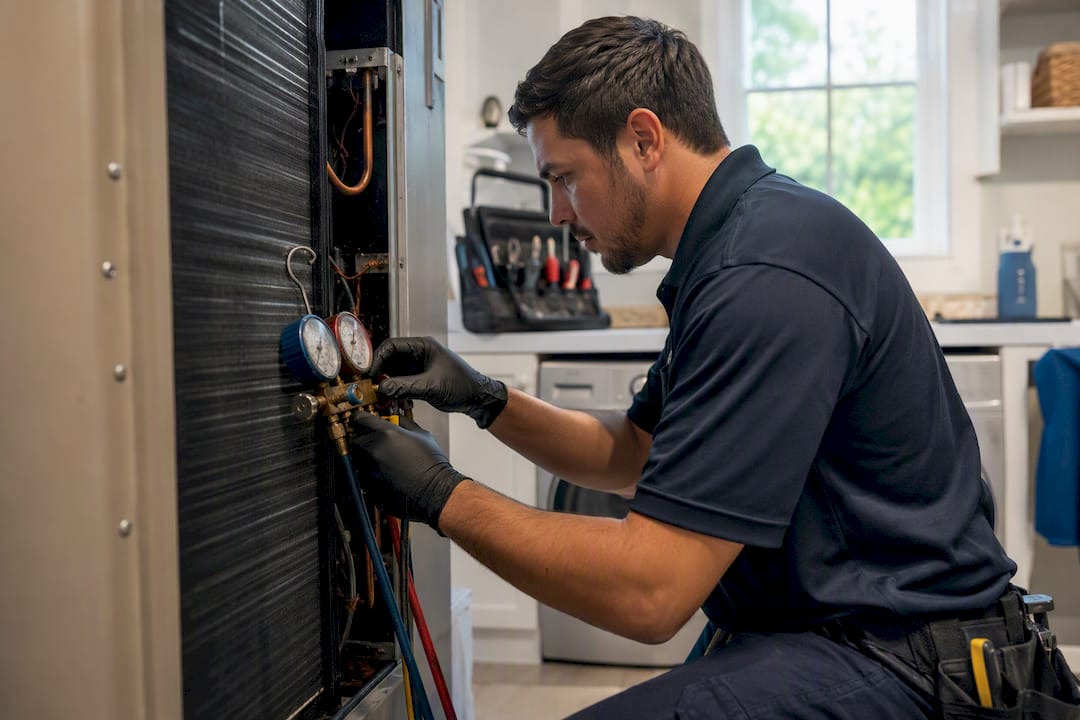
A quality inspection report should include photos of anything concerning, a short written list of observed issues, and clear recommendations if follow-up repair is needed. It should not be a generic “everything’s fine” checkbox with no detail.
Pro Tip: A thorough tune-up takes an hour or more. Very short visits may not include a complete check.
What’s Usually Excluded From an HVAC Maintenance Plan?
Most contracts are narrower than homeowners assume, and the gaps matter as much as the inclusions. Standard plans typically exclude major component replacement, meaning if the tune-up reveals a failing compressor or a cracked heat exchanger, that repair gets billed separately, sometimes at a discounted member rate, sometimes at full price depending on the tier.
Duct cleaning and duct repair are almost never part of a base plan, even though airflow problems directly affect system efficiency. Same goes for mold remediation, pest damage in ductwork, and any pre-existing issues the system had before you enrolled. If your unit was already struggling when you signed up, don’t expect the plan to retroactively cover that damage.
Emergency after-hours service is another common gray area. Some plans include it, many charge extra for nights, weekends, or holidays even for members. And coverage rarely extends to code-required upgrades, meaning if an inspector flags your system for not meeting current electrical or ventilation code, that upgrade typically falls outside standard maintenance terms.
This is exactly why the CBS News guidance on comparing coverage carefully matters here. Read the exclusions section of any contract before the inclusions section. It tells you more about what you’re actually buying.
Why we recommend a maintenance membership
We recommend a maintenance membership because a repairs-first approach and transparent pricing catch small problems before they become expensive replacements, and members get priority attention during the brutal summer heat spikes and rare winter freezes San Antonio still gets. Compare any membership, including ours, against the contract checklist covered earlier. That’s what it’s there for.
Get Priority Maintenance Scheduling With Texas Comfort Crew
Texas Comfort Crew’s maintenance membership gives you what the contract checklist above demands: seasonal spring and fall tune-ups, priority scheduling when your neighbors are waiting on hold during a heat spike, and discounts on parts and labor if a repair turns up during your visit.

Every visit follows a repairs-first philosophy, meaning our technicians tell you what’s actually wrong before recommending anything you don’t need. That’s the transparent pricing and thorough evaluation this article has been walking you through, applied to your actual system. Membership includes clear communication about what each visit covers, no vague “full system check” language, and no pressure to sign on the spot.
If you’re in the Greater San Antonio area, check membership plan details or find your local service area to see availability and get your first tune-up booked before the next seasonal rush.
Sources
FAQ
Is It Worth Getting an HVAC Maintenance Plan?
For most homeowners, yes. HVAC Base’s cost modeling estimates a 3:1 to 5:1 return through lower energy bills and fewer emergency repairs, and Texas Comfort Crew’s membership adds priority scheduling on top of that.
What Routine Maintenance Does an HVAC System Need?
At minimum, a professional tune-up twice a year (spring for cooling, fall for heating) plus monthly filter changes and clear space around the outdoor unit, per ENERGY STAR’s checklist.
What’s Usually Included in HVAC Maintenance?
A standard visit covers thermostat checks, electrical inspection, coil cleaning, refrigerant level checks, condensate drain flushing, and combustion or carbon monoxide testing on gas furnaces.
What Should Be in an HVAC Maintenance Contract?
Look for the number of visits per year, parts versus labor coverage, diagnostic fee policy, emergency service terms, and cancellation or transferability rules before you sign.
How Long Does a Typical Tune-Up Take?
A thorough professional tune-up usually takes 45 to 90 minutes. Anything significantly shorter likely skipped steps on the standard checklist.
Recommended
Comments