
Texas Homeowners: Brown Tap Water? 10–20 Minute Fixes and What to Say

Brown water from a tap almost always means rust or sediment got stirred up somewhere between the water main and your faucet, not that your water supply has failed. Run a cold tap for a few minutes first. If it clears, you’re fine. If it doesn’t clear within about 20 minutes, skip drinking or cooking with it, and check whether neighbors have the same problem before you call anyone.
TL;DR:
Brown water caused by municipal disruptions typically clears within a few hours of flushing, while internal sources like water heater sediment may persist beyond 20 minutes.
Hot water discoloration almost always indicates an internal problem such as a failing water heater anode rod, not a municipal issue affecting the whole house.
During an event, flushing for 10 to 20 minutes and checking neighbors helps determine whether the problem is systemic or localized to your property.
Avoid drinking or cooking with brown water and hold off on laundry until it fully clears to prevent fabric stains and potential health risks.
Regular maintenance, such as flushing water heaters and replacing corroded pipes, can prevent future discoloration issues.
Table of Contents
What Causes Brown Water From the Tap?
Two different sources create brown water: the municipal system outside your house and the plumbing inside it. Telling them apart starts with color, smell, and which fixtures are affected.
On the municipal side, water-main disturbances are the most common trigger. Crews flushing hydrants, repairing a break, or even a sudden spike in demand can knock loose rust that’s been sitting quietly on the inside walls of distribution pipes for years. That rust rides along with the water pressure change and shows up brown or orange at your tap, usually across your whole house and often affecting neighbors too.
Inside your home, the culprits look different:
Aging galvanized or cast-iron service lines corrode from the inside, shedding rust gradually or in bursts when pressure shifts.
Water heater sediment builds up at the tank bottom over years; when the anode rod inside starts failing, it accelerates rust production, and you’ll notice brown water only from hot taps.
Well water sources carry their own signature problems: iron produces a reddish brown tint with a metallic smell, manganese leans darker and almost black, and tannins from decaying organic matter turn water tea colored with an earthy odor, according to the USGS Water Science School.
A rusty, metallic smell usually points to iron. A musty or earthy smell points to tannins or organic sediment rather than a plumbing failure, a distinction water-quality guidance treats as one of the more reliable clues available to homeowners without lab equipment.
How to Diagnose Where Brown Water Is Coming From
Work through this in order before you pick up the phone. It takes ten minutes and gives you exactly what a utility or plumber will ask for.
Check hot and cold separately. Brown water only from the hot tap almost always means water heater sediment. Brown from both hot and cold points to the supply line or the main.
Run one cold tap and time it. Let it run for a few minutes. Municipal disturbance events typically clear within a couple of hours of intermittent flushing, according to Portland Water Bureau guidance, while a persistent problem past 20 minutes of running water usually means an internal source.
Check with neighbors or your utility’s alert page. If several houses on your street report the same brown tint at the same time, it’s almost certainly a main-side event, not your plumbing.
Inspect aerators and toilet tank walls. Unscrew a faucet aerator and look for reddish sludge. Lift a toilet tank lid and check for rust streaks, both signs of internal corrosion.
Write down what you see. Color, smell, which fixtures, and how long it’s lasted. That detail speeds up any call you make later.
Pro Tip: Take a photo of the water in a clear glass right when you notice it. Color fades from memory fast, and a technician or utility rep will ask exactly how dark and how cloudy it was.
Is Brown Water Safe to Drink, Cook With, or Shower In?
Skip drinking or cooking with visibly brown water until it runs clear. Sediment and rust aren’t typically dangerous in small amounts, but you can’t tell from color alone whether bacteria or other contaminants are present, especially after a water-main break.
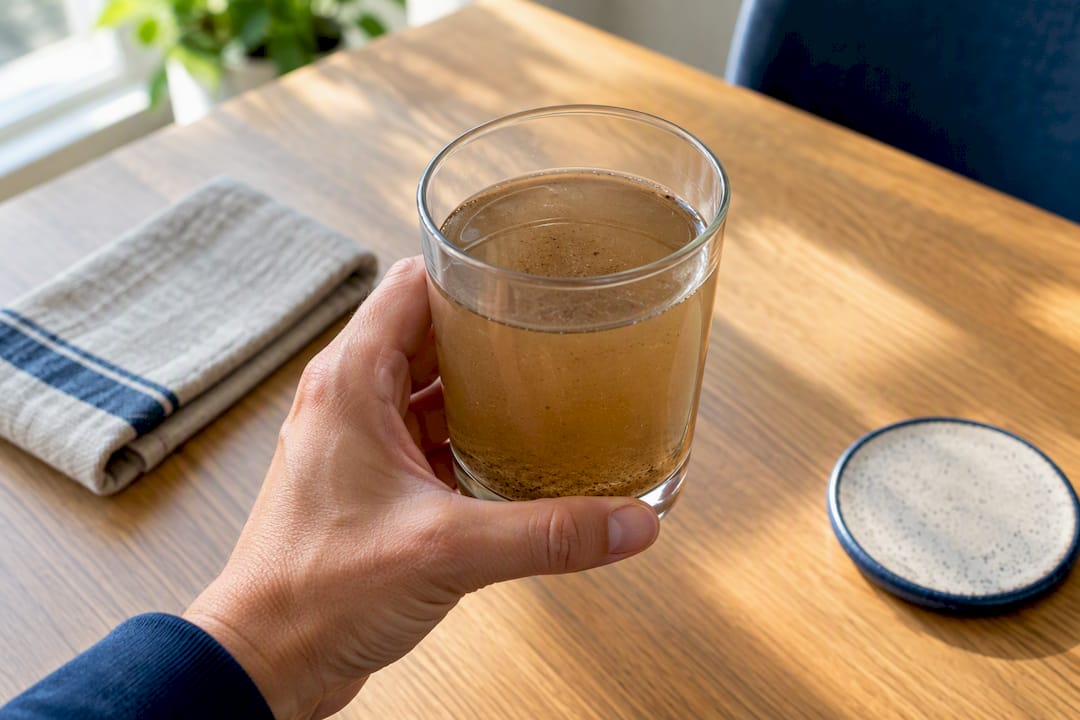
Showering is usually lower risk than drinking since you’re not ingesting it, but heavy sediment, a strong odor, or an active advisory are reasons to hold off on bathing too. If your utility issues a boil-water or do-not-use notice, follow it exactly. Those notices exist because the EPA’s drinking water standards define specific contaminant thresholds that trigger a public health response, and utilities don’t issue them casually.
A few situations call for testing rather than guessing:
Discoloration that persists more than a day with no municipal explanation
A metallic or rotten odor accompanying the color
Any household member with a compromised immune system relying on the water
Immediate Actions: Flush, Report, Avoid, Call
Here’s the order that actually solves this fastest, based on both utility guidance and remediation practice.
Run a cold-water faucet for 10 to 20 minutes, or until it clears. This flushing window is the flushing duration most utilities recommend after a main disturbance, because it gives loosened sediment time to work its way out of your line.
Stop using hot water until you know the cause. Running discolored hot water pulls more sediment through your water heater and can clog fixtures.
Hold off on laundry, especially anything light colored, since rust stains set permanently in fabric.
Call your water utility if flushing doesn’t clear it or if neighbors report the same thing. Give them the color, smell, duration, and which fixtures are affected. Utilities are typically responsible for water quality up to your property line, while everything past that line falls to you as the homeowner, which is exactly why that call matters before you assume it’s a plumbing problem.
Call a licensed plumber if the problem is isolated to your property, shows up hot-only, or keeps recurring after flushing. That pattern usually means internal corrosion or a failing water heater component, not a municipal issue.
Preventing Brown Water Before It Starts Again
A little maintenance now beats another brown-water scare later.
Flush your water heater once a year. Sediment buildup is the single most preventable cause of hot-only discoloration, and a five-minute flush at the drain valve clears most of it.
Check the anode rod every two to three years. A worn rod stops protecting the tank, and corrosion accelerates fast once it’s gone.
Replace galvanized or badly corroded service lines if you’re dealing with recurring whole-house discoloration. Filters treat the symptom; a corroded line is the actual disease, and at some point replacement costs less than years of filter cartridges.
Install a whole-house sediment or iron filter if you’re on well water or an older municipal system with a history of rust. Filters handle particulate and iron well but won’t fix a failing anode rod or a cracked line, so know what you’re actually solving before you buy one.
Sign up for utility alerts covering your street or zip code, and check your provider’s outage or water-quality page whenever discoloration hits.
What a Plumbing Crew Actually Sees When Brown Water Calls Come In
Most brown-water service calls Texas Comfort Crew fields split into two buckets: water heater sediment with a dying anode rod, or a corroded supply line that’s finally shedding enough rust to notice. Telling them apart on site comes down to the same hot-versus-cold check homeowners can do themselves, plus a look inside the tank and at pipe condition where it’s accessible.
The approach stays consistent: evaluate first, explain what’s actually happening in plain terms, and recommend a repair over a full replacement whenever the pipe or tank still has useful life left. Before a visit, it helps to have a few things ready:
Photos of the water at its worst
Notes on exactly when the color started
A list of which fixtures show it and which don’t
If the water heater turns out to be the source, our guide on water heater leaks covers related warning signs worth knowing before a technician arrives.
Why Homeowners Get the Response to Brown Water Backward
Most guidance on brown water focuses on causes first and action second. That’s backwards for anyone standing at a sink watching rust-colored water fill a glass. The causes matter for prevention, but in the moment, the sequence is what saves money and stress: flush, check neighbors, decide who to call.
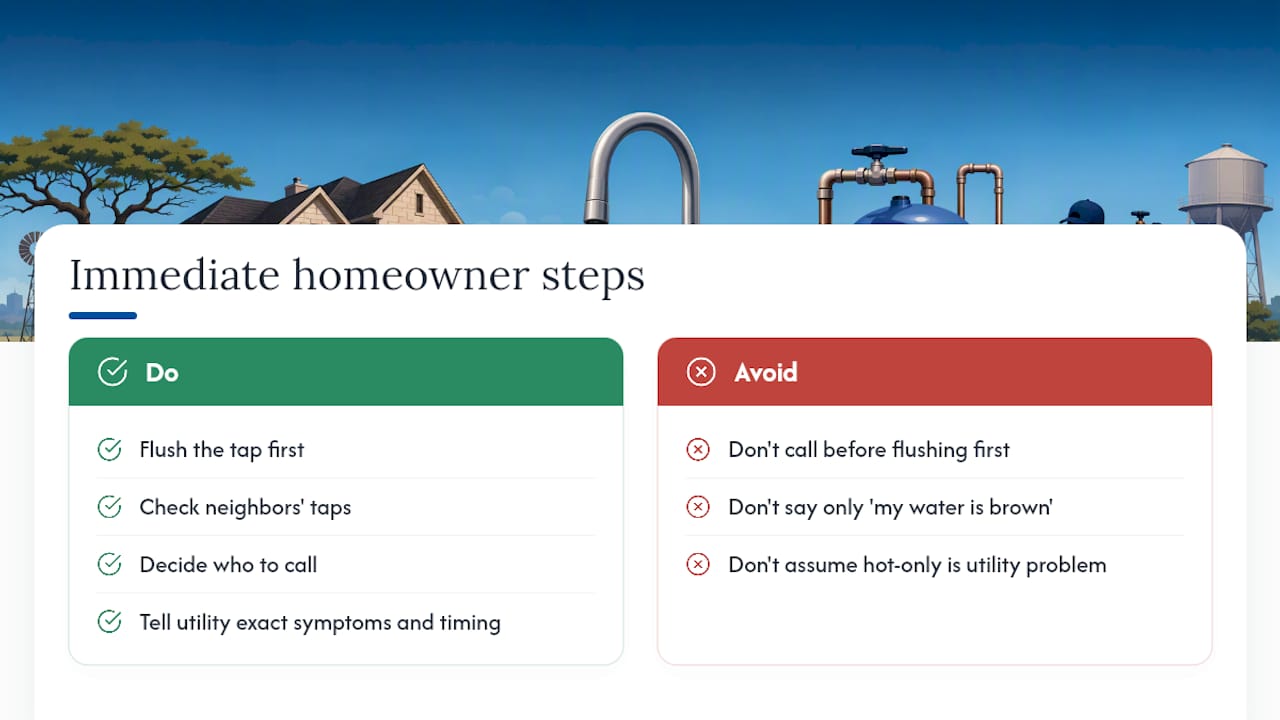
The part conventional advice skips is the language homeowners need when they actually pick up the phone. Telling a utility rep “my water is brown” gets you a generic response. Telling them “cold tap only, cleared to light amber after 15 minutes, three houses on my block affected” gets you an actual answer, often within the same call. That specificity is the difference between a two-day wait and same day flushing at the hydrant.
The biggest misdiagnosis I see reasoned through in this kind of research is homeowners assuming hot-only discoloration is a municipal problem. It almost never is. If cold water runs clear and only hot water turns brown, the water heater is the story, full stop, and no amount of calling the utility changes that. Start there, not with the phone.
— Dan Patino
Get Your Plumbing Checked by Texas Comfort Crew
Some plumbing crews fix the actual source of brown water instead of just recommending a new water heater or a full repipe you may not need. If sediment, a failing anode rod, or a corroded line is behind your discoloration, a plumbing team can diagnose it on site, explain what is happening, and provide a repair-first recommendation with a written quote before any work starts.

Scheduling a visit gets you a real inspection, not a guess. The plumbing team checks your water heater, tests pressure at multiple fixtures, and inspects visible piping for corrosion, then explains what they found in plain language. If a leak turns out to be part of the picture, our leak detection service can pinpoint it without tearing out walls unnecessarily. Homeowners across our San Antonio area service footprint can get a plumbing evaluation scheduled directly through our site, and there’s no pressure to replace anything that can be repaired instead.
Where to Verify Water Quality and Safety Information
For deeper reference, check the EPA’s contaminant standards, USGS water science pages, Portland Water Bureau’s discolored water guidance, and SERVPRO’s household remediation steps.
Sources
FAQ
Is Brown Water From the Tap Safe to Drink?
Not while it’s visibly discolored. Skip drinking or cooking with it until it runs clear, since color alone can’t confirm whether bacteria or other contaminants are present, and the EPA’s drinking water standards exist specifically to define when a health risk crosses into advisory territory.
How Do I Fix Brown Water Coming From a Tap?
Run a cold-water faucet for 10 to 20 minutes to flush loosened sediment. If it clears, you’re done; if it doesn’t, check whether neighbors are affected and call your utility, or call a licensed plumber if the problem is isolated to your home or hot-water only.
Is It Okay to Shower if My Water Is Brown?
Showering carries lower risk than drinking since you’re not ingesting the water, but heavy sediment, a strong odor, or an active utility advisory are reasons to wait until it clears. Skin contact with mild rust discoloration generally isn’t harmful, though it can irritate sensitive skin.
How Long Does It Take for Brown Water to Go Away?
Municipal disturbance events typically clear within a few hours as sediment resettles in the pipes, according to Portland Water Bureau guidance. If flushing your cold tap for 20 minutes doesn’t clear it, the cause is more likely internal plumbing or a water heater issue that won’t resolve on its own.
Recommended
Comments