
AC Short Cycling for Homeowners: When 5 Minute Cycles Mean Stop
If your air conditioner shuts off and restarts every few minutes, it’s short cycling, and it’s wearing out your compressor faster than normal use ever would. A healthy system runs a full cooling cycle for 15 to 20 minutes; anything under 5 minutes is a real problem. Start with the filter and thermostat placement first, and if the unit keeps tripping or you hear electrical noises, shut it off and call a licensed technician.
TL;DR:
Short cycling typically involves compressor shutdowns in less than five minutes, which accelerates wear and shortens the system’s lifespan.
The primary causes include airflow restrictions, thermostat misplacement, refrigerant leaks, electrical component failures, oversized units, and compressor overheating.
Most issues can be diagnosed by timing full cycles, inspecting filters, checking airflow, and listening for specific sounds before calling a technician.
Continuing to run the system during short cycling can cause further damage, increase energy waste, and reduce dehumidification effectiveness.
Preventative measures include regular filter changes, annual tune-ups, proper thermostat placement, clear outdoor units, and proper system sizing based on load calculations.
Table of Contents
What Counts as AC Short Cycling vs. a Normal Cycle?
A properly sized central air conditioner runs a complete cooling cycle for 15 to 20 minutes before shutting off, giving the system time to pull humidity out of the air and cool the space evenly. Short cycling occurs when the compressor runs for only a few minutes before shutting off and then restarting shortly afterward. According to InspectApedia’s guidance, Restart intervals that are very short, generally under about 5 minutes, indicate short cycling needing repair, while intervals under about 10 minutes likely deserve inspection.
The easiest way to confirm it: grab a timer and watch one full hour.
A normal system starts only a few times per hour, whereas a short-cycling system starts many more times in the same period.
Watch for related symptoms too: sticky indoor air even when the thermostat says it’s cooling, the outdoor condenser fan spinning without the compressor engaging, or the unit sounding like it’s straining to start.
Counting more than a few starts an hour indicates the system is shutting down prematurely.
Common Causes of AC Short Cycling
Short cycling almost always traces back to one of six problems, and the pattern of symptoms usually points you toward the right one.
Airflow restriction. A clogged filter, closed vents, or blocked return grilles starve the system of airflow, causing the evaporator coil to ice over and the compressor to shut down on a safety switch.
Thermostat problems. A thermostat mounted near a supply vent, a window, or direct sunlight reads the wrong temperature and cycles the system erratically. Miscalibration and bad wiring cause the same effect, according to Thermostating’s troubleshooting guide.
Refrigerant leaks. Low refrigerant charge drops system pressure, tripping a safety cutout that shuts the compressor down before it overheats.
Failing electrical components. A weak start or run capacitor produces a telltale pattern: the outdoor fan starts, the compressor hums for a few seconds, then the whole unit shuts down, per Carrier’s cooling center. A worn contactor or failing control board can cause similar stutters.
Oversized equipment. A system sized too large for the home cools the air fast without running long enough to pull out humidity, so it cycles constantly. This isn’t something a homeowner can fix with a filter swap.
Compressor overheating. Years of short cycling stress the compressor itself until it starts shutting itself down as a last line of defense, often the sign of a unit near the end of its life.
Priority DIY Checklist Before You Call for Repair
Work through these steps in order. Most short-cycling cases get resolved somewhere in the first three.
Time three or four cycles with a phone timer. If any cycle runs under 5 minutes, or you hear buzzing, clicking, or a burning smell, stop here and call a technician. Don’t run the system further.
Replace the air filter. A dirty filter is one of the most common fixable causes, and it takes two minutes to swap.
Check every supply and return register. Make sure furniture, rugs, or curtains aren’t blocking airflow, and that vents throughout the house are open.
Look at thermostat placement and settings. A thermostat near a heat source or vent will misread the room. Some models also let you check a minimum compressor off time setting, which controls how long the system waits before restarting.
Clear debris around the outdoor condenser. Leaves, grass clippings, and mulch piled against the unit block airflow and force the compressor to work harder than it should.
Check the indoor coil for ice. If you see frost or ice on the indoor coil or refrigerant lines, switch the thermostat to fan only and leave the compressor off for 60 to 90 minutes to let it thaw completely before running the system again.
Pro Tip: Write down what you hear, not just what you see. A hum-then-cutout pattern almost always points to a capacitor, while a hiss or bubbling sound near the lines points toward refrigerant. Telling a technician which one you heard can cut diagnostic time in half.
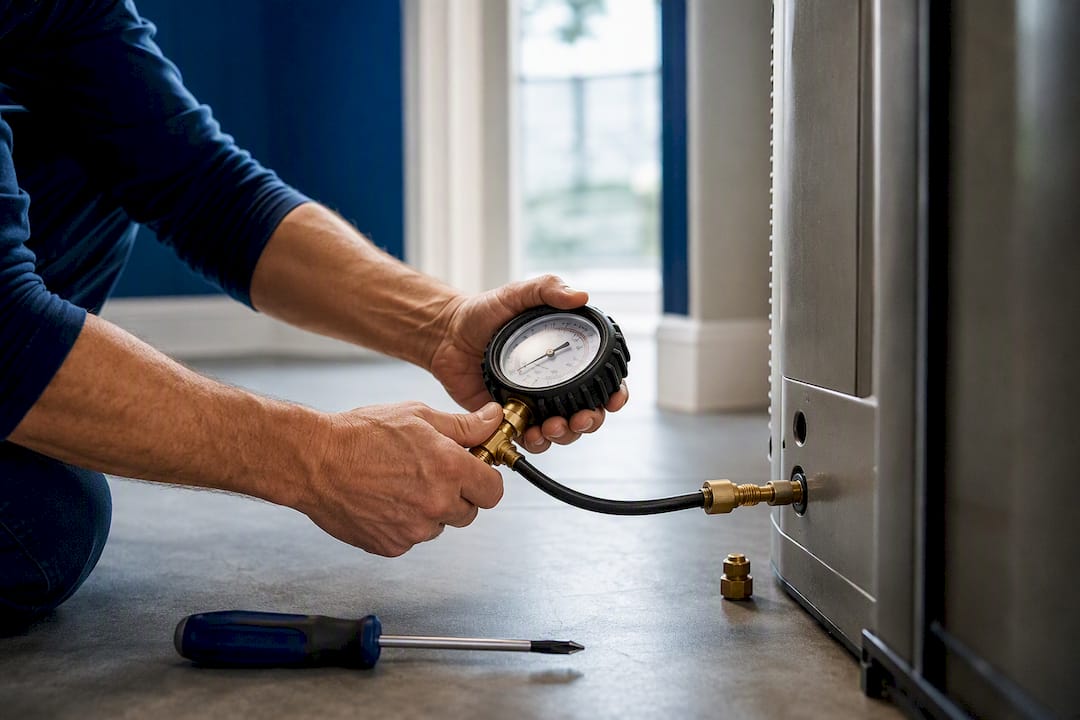
If you’ve worked through all six steps and the system still short cycles, it’s time for professional diagnostics: pressure gauges to check refrigerant charge, a capacitor bench test, and electrical leak detection tools that go beyond what’s safe for a homeowner to attempt.
When Should You Stop Running the AC and Call a Pro?
Some symptoms mean stop now, not “try one more thing first.”
Cycles running under 5 minutes even after a filter change
Any burning smell from the vents or the outdoor unit
The breaker tripping more than once
The outdoor fan humming or spinning with no compressor engagement
Visible ice on the indoor coil or refrigerant lines
Continuing to run a short-cycling system doesn’t just waste energy. Every restart sends a surge of current through the compressor and start capacitor, and that repeated thermal and electrical stress can shorten a compressor’s life by years. You also lose the dehumidification a full cycle provides, so the house feels clammy even while the thermostat reads a comfortable number.
When you call, tell the technician the cycle length you timed, any sounds you heard, and whether you saw ice. Refrigerant work specifically requires a licensed technician with EPA-regulated handling equipment; topping off refrigerant without fixing the leak is a temporary patch at best.
How to Prevent Short Cycling From Coming Back
Change your air filter every 1 to 3 months depending on your household and pets.
Book an annual tune-up that includes a coil cleaning, refrigerant level check, capacitor test, and electrical connection inspection.
Keep the thermostat away from vents, lamps, and direct sun, and consider a remote sensor if one room consistently runs hot or cold.
Clear a two-foot buffer of vegetation and debris around the outdoor condenser.
If short cycling has been happening since the day the system was installed, ask a contractor for a Manual J load calculation. An oversized unit is a sizing problem, not a maintenance problem, and it usually means talking through equipment options rather than another repair visit.
Pro Tip: Mark your filter change date on the filter frame itself with a marker. It sounds simple, but it’s the single easiest way to stop guessing whether you changed it three weeks ago or three months ago.
How Texas Comfort Crew Diagnoses Short Cycling
Texas Comfort Crew starts every short-cycling call with a repair-first mindset, checking the cheap fixes before ever discussing replacement. That means pulling the capacitor for a bench test, connecting pressure gauges to verify refrigerant charge, and running leak detection where warranted, tools no homeowner should attempt at home. You get a clear explanation of what’s actually failing and a transparent quote before any work starts. Homeowners on a maintenance membership catch most of these issues at the annual tune-up, long before the system starts stuttering through hot afternoons.
The Real Lesson Behind Short Cycling
Most guides on this topic treat short cycling as a checklist problem: swap the filter, check the thermostat, done. That advice isn’t wrong, but it undersells how much timing matters. A cycle running at 8 minutes and one running at 3 minutes look identical to a homeowner glancing at a thermostat screen, yet they represent completely different levels of urgency. The 8 minute cycle might tolerate a week of observation. The 3 minute cycle is actively hammering a compressor with every restart.
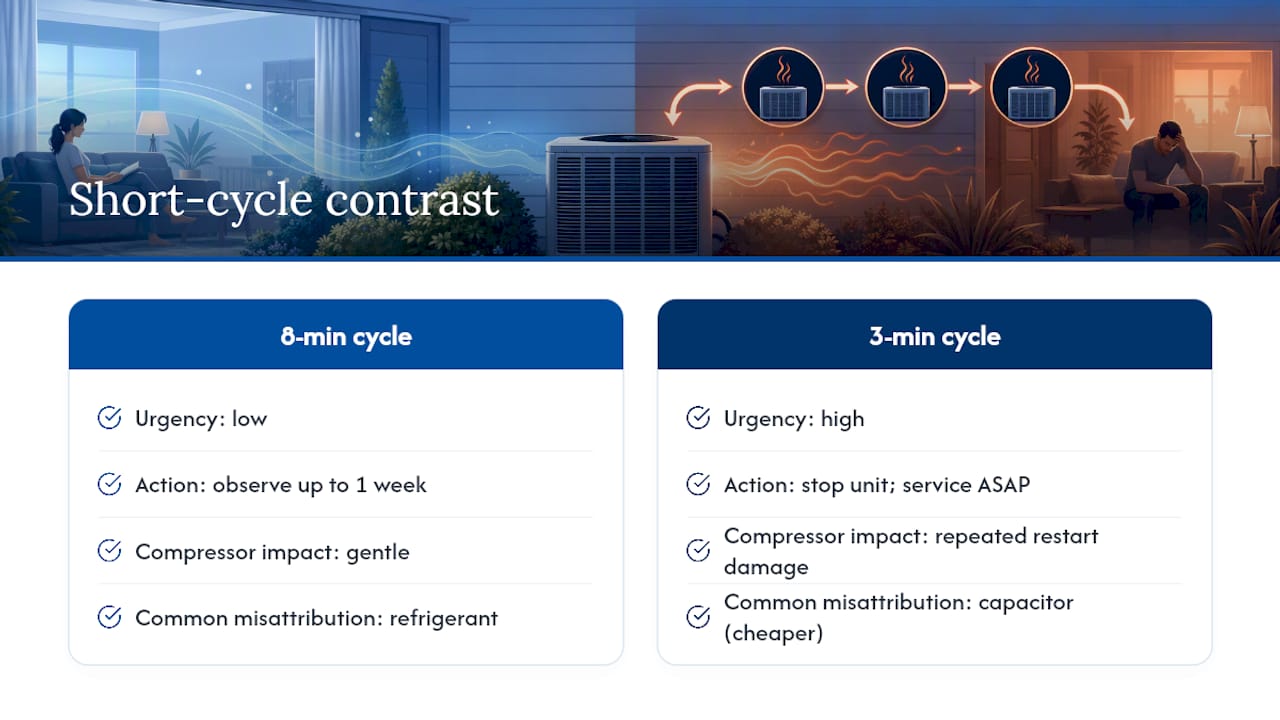
The conventional advice also underweights the electrical failure pattern. Homeowners fixate on refrigerant because it sounds like the scary, expensive answer, when in practice a failing capacitor produces a nearly identical symptom, a hum, then a cutout, and costs far less to fix. Learning to tell the two apart by sound alone is worth more than any generic maintenance checklist.
What actually matters is discipline: time the cycles before doing anything else, and let that number decide whether you’re looking at a Saturday afternoon fix or a reason to stop running the unit entirely.
— Dan Patino
Need a Diagnostic? Here’s How to Get One Fast
Texas Comfort Crew runs a diagnostic-first process for every short-cycling call across the Greater San Antonio area, checking capacitors, refrigerant pressure, and airflow before recommending anything, and every estimate is explained in plain language before work begins.

A standard diagnostic visit includes a full cycle-timing check, an electrical component test, and a coil and airflow inspection, usually wrapped up in one appointment. If your system is stuttering through cycles in Spring Branch, the Spring Branch service team can get a technician out with gauges and bench-test equipment rather than guesswork. Homeowners further north can reach the Stone Oak service area page for local scheduling, and anyone wanting to catch problems before they start can look into the membership plan for annual tune-ups that check capacitors and refrigerant levels before summer heat exposes them. Book online or call to get a technician on the calendar this week.
Sources
Technical thresholds and repair guidance in this article draw from Bryant, InspectApedia, Carrier’s cooling center, and Dimatic Control. For local service details, visit the Texas Comfort Crew homepage.
FAQ
How Do I Stop My AC From Short Cycling?
Start by replacing the air filter and checking that the thermostat isn’t near a vent, sunlight, or heat source, since those two fixes resolve many cases on their own. If cycles still run under 10 minutes after that, the cause is likely electrical or refrigerant related and needs a licensed technician.
Should I Turn My AC Off If It’s Short Cycling?
Yes, if cycles are running under 5 minutes, you hear buzzing or humming without the compressor starting, or you see ice on the coil, switch the system off or to fan only and call a technician rather than let it keep restarting.
How Much Does It Cost to Fix a Short Cycling AC?
Costs vary widely because the fix depends entirely on the cause: a filter or thermostat relocation costs little, while a capacitor replacement, refrigerant leak repair, or control board swap runs higher. Texas Comfort Crew provides a transparent quote after diagnosing the specific cause rather than a flat estimate before inspection.
What Would Cause an AC Compressor to Short Cycle?
The most common electrical trigger is a failing start or run capacitor, which produces a hum-then-cutout pattern as Carrier’s technicians describe. Low refrigerant charge, a worn contactor, and an oversized unit that cools too fast can all trigger the same short-cycle pattern.
Comments