
AC Not Turning On? Quick Troubleshooting Before You Call
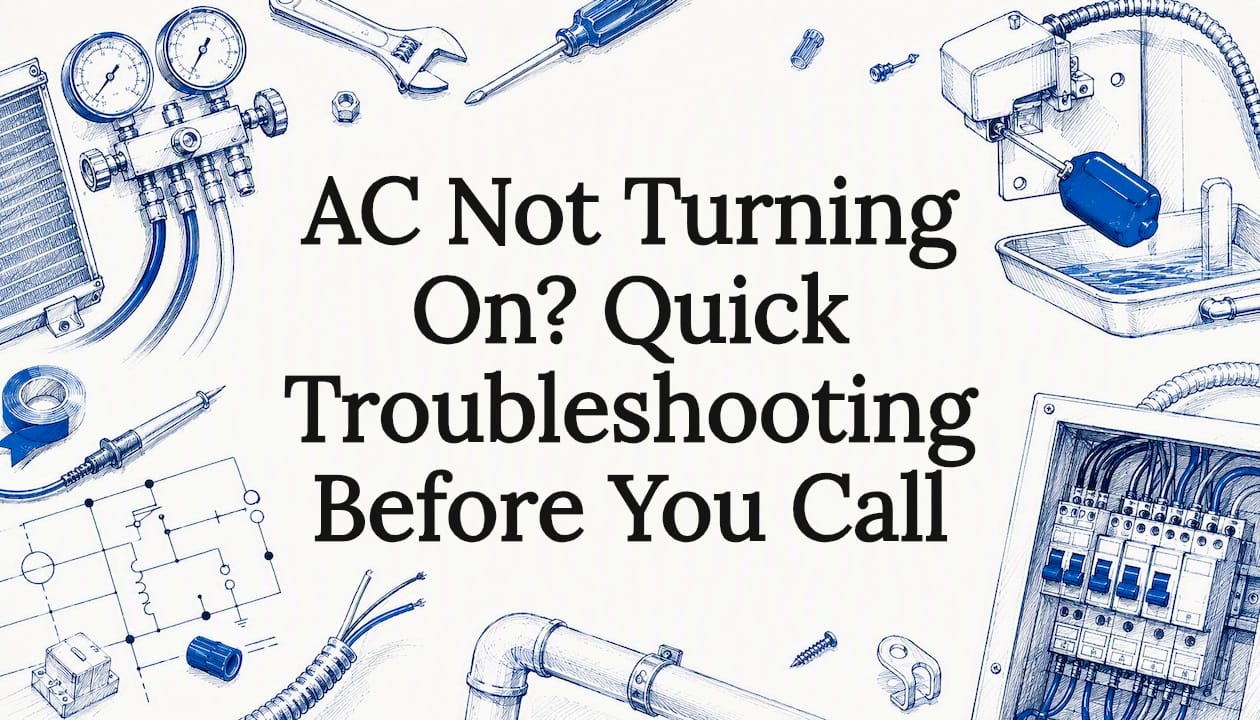
Most of the time an AC not turning on comes down to one of five things: a thermostat problem, a tripped breaker, a disconnected outdoor switch, a clogged condensate line, or a dirty filter that triggered a safety shutdown. Run through these before you assume the worst.
Check them in this order, since it mirrors how Carrier’s own troubleshooting guidance recommends technicians approach a no-start call:
Thermostat: confirm it’s set to “Cool,” the setpoint is below room temperature, and the batteries aren’t dead.
Breakers: check both the main panel and the dedicated AC breaker for a trip.
Outdoor disconnect: make sure the pull-out switch near the condenser is fully seated.
Condensate float switch: look for standing water in the drain pan, a sign the safety switch has shut the system down.
Air filter: pull it and hold it up to a light. If you can’t see through it, that’s likely part of the problem.
If none of these five checks gets the system running, stop trying to open panels or test electrical components yourself. Burning smells, visible sparks, or heavy ice on the coils mean it’s time to cut power at the breaker and call a professional.
Key Takeaways
Most AC no-start problems trace back to a thermostat, breaker, outdoor disconnect, condensate float switch, or dirty filter, and technician-level fixes like capacitors and compressors should never be attempted without training.
Point | Details |
Run the five basic checks first | Thermostat, breakers, outdoor disconnect, condensate float, and air filter resolve most no-start calls. |
A float switch shutdown is protective | It’s the system preventing water damage, not a malfunction, and often resets once the drain clears. |
Know the stop signs | Burning smells, sparks, heavy ice, or a breaker that trips again immediately mean shut off power and call a pro. |
Costs vary widely by cause | Free thermostat and breaker fixes sit at one end; compressor or refrigerant repairs sit at the other. |
Texas Comfort Crew diagnoses before recommending replacement | Their technicians check the same sequence covered here and provide a written estimate before any repair. |
Table of Contents
AC Won’t Turn On? Here’s the Troubleshooting Order That Works
HVAC technicians follow a specific sequence when they show up to a no-start call, and there’s no reason a homeowner can’t do the same first four or five steps before ever picking up the phone. American Standard’s troubleshooting guidance backs the same order: thermostat, breaker, outdoor disconnect, condensate float, then filter. Anything past that point belongs to a technician.
Check the thermostat display. If it’s blank, the issue might be as simple as dead batteries rather than a wiring fault. Swap them and wait 60 seconds before testing again.
Confirm the mode and setpoint. It sounds obvious, but a thermostat left in “Heat” or “Off,” or a setpoint sitting above room temperature, is a genuinely common miss.
Walk to the electrical panel. Look for a breaker that’s flipped to the middle position rather than fully “off.” Reset it firmly to off, then back to on.
Locate the outdoor disconnect box. This gray metal box sits near the condenser, usually mounted on the exterior wall. Pull it out, inspect it for a blown fuse, and reseat it firmly. Lennox notes that a pulled or tripped disconnect will leave the outdoor unit dead even when the thermostat looks normal indoors.
Check the condensate drain pan for standing water. A full pan means the float switch has done its job and shut the system down to prevent a leak into your ceiling or walls.
Pull the air filter and inspect it. A filter clogged enough to restrict airflow can eventually freeze the evaporator coil and shut the whole system down as a protective measure.
Do a controlled reset. Turn the thermostat off, flip the breaker off for 60 seconds, then restore power and set the thermostat to Cool. Systems have a built-in anti-short-cycle delay, so give it three to five minutes before you decide it’s still not working.
This sequence also helps you isolate where the fault lives. If the indoor blower runs but the outdoor unit stays silent, you’re looking at a power or component issue at the condenser. If nothing happens anywhere, the fault is more likely upstream at the thermostat or breaker.
Pro Tip: Keep your phone’s flashlight handy when checking the outdoor disconnect box. A quick look for scorch marks or a burnt smell tells you immediately whether this is a five-minute fix or a call-a-professional situation.
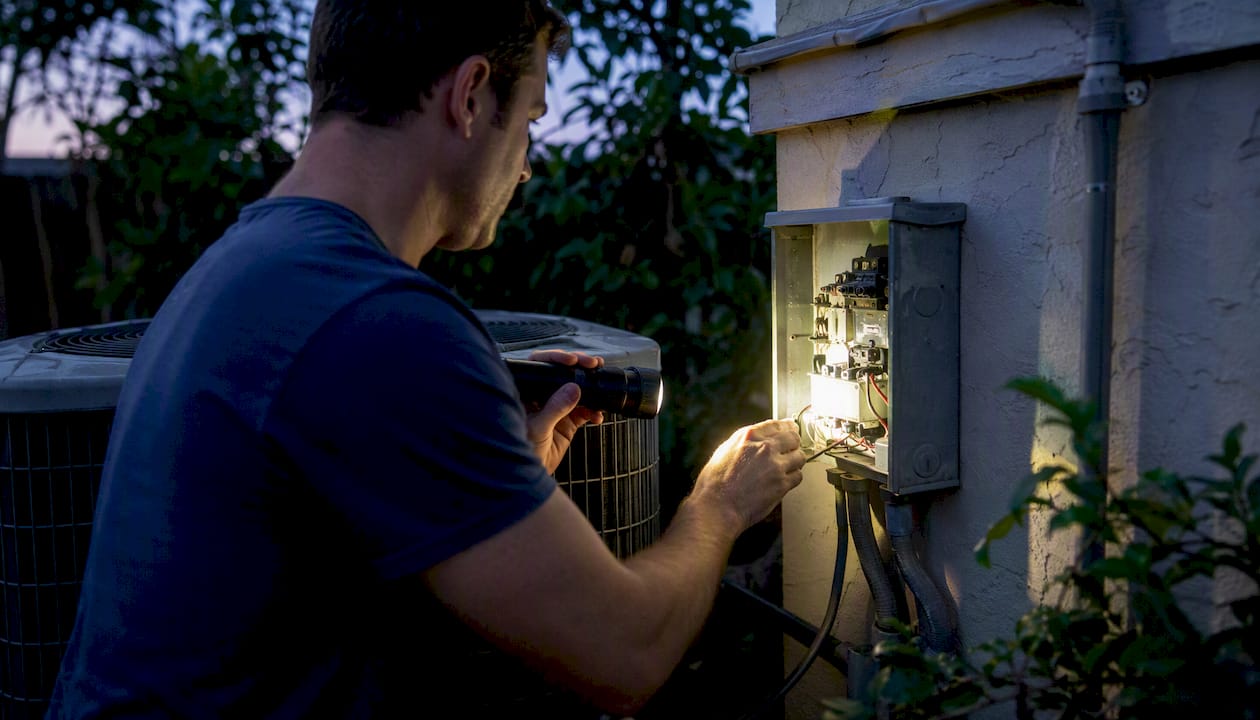
Stop here if you smell anything electrical, see exposed or frayed wiring, or notice the breaker trips again immediately after reset. Those are jobs for a licensed technician, not a screwdriver and good intentions.
What’s Actually Stopping Your AC From Starting?
An air conditioner not starting almost always traces back to one of eight causes, and they split cleanly into two categories: things you can check yourself and things that need a technician’s tools.
Power problems show up as complete silence, no thermostat display, and no hum from either the indoor or outdoor unit. Check the main panel and the AC’s dedicated breaker first. If it trips again right after reset, stop resetting it. A breaker that won’t hold is signaling a real electrical fault downstream.
Thermostat issues are sneakier than people expect. A blank screen usually means dead batteries, not a failed control board. Carrier points out that homeowners often assume the worst when the fix is a fresh set of AAs or reseating a smart thermostat on its base. Wrong mode selection and a setpoint that’s not actually below room temperature round out the usual thermostat mistakes.
A clogged condensate drain or triggered float switch will shut a system down entirely, and this is one of the most common causes people overlook. The float switch is doing exactly what it’s designed to do, protecting your home from water damage, and it typically resets on its own once you clear the clog and the water drains. Data from Venta HVAC suggests a significant share of no-start service calls get resolved at the thermostat or breaker before a technician ever opens a panel, which underscores how often the fix is simpler than homeowners fear.
A dirty air filter restricts airflow enough to freeze the evaporator coil in some cases, and a frozen coil can trip a system into a protective shutdown. Consumer Reports identifies a clogged filter as the single most common maintenance issue behind AC performance problems, and it’s the easiest one on this list to prevent.
Past this point, you’re in technician territory:
A failed start or run capacitor prevents the compressor or fan motor from getting the jolt of torque it needs to start, even when power is reaching the unit.
A welded or pitted contactor can keep the system from receiving the signal to run, or keep it running when it shouldn’t.
A failed transformer or control board cuts the low-voltage signal between thermostat and equipment.
Compressor failure is the least common cause but the most expensive to fix, and it’s not something to diagnose with a multimeter you bought last week.
When Should You Stop and Call a Professional?
Some signs mean you close the panel, walk away, and pick up the phone immediately. There’s no troubleshooting step worth risking a shock or a fire over.
Shut the system off at the breaker and call for help right away if you notice any of the following:
A burning or electrical smell coming from the indoor unit, the outdoor unit, or the thermostat.
Visible sparks, arcing, or smoke from the outdoor disconnect or condenser.
Loud buzzing paired with any hint of smoke or a burning odor.
Refrigerant hissing or spraying near the outdoor unit.
Heavy ice buildup coating the indoor coil or refrigerant lines.
A breaker that trips again immediately every time you reset it.
Buzzing, burning smells, or visible ice on the coils are signs of a significant electrical or refrigeration problem, not something to push through with another reset. Cut power at the breaker and call a professional before you touch anything else.
If you smell burning anywhere in the house, evacuate the area and shut off power at the main panel rather than the individual AC breaker. Then call an HVAC company or, if the smell is strong and persistent, an electrician.
Before you dial, jot down a few details that’ll speed up the visit: what exactly you’re seeing (blank thermostat, silent outdoor unit, tripped breaker), whether there was a recent storm or power surge, and whether the indoor blower runs at all even if the outdoor condenser stays silent. That last detail alone helps a technician narrow the problem down before they even pull into your driveway.
How Does a Central AC Actually Start Up?
Understanding the start sequence makes the whole troubleshooting process click. It’s a short chain of events, and a broken link anywhere along it means the system won’t fire up.
Here’s the sequence: the thermostat calls for cooling, which sends a 24 volt low voltage signal to the outdoor unit. That signal energizes the contactor, a switch that closes to send full power to the compressor and outdoor fan motor. The capacitor gives the compressor and fan motor the extra jolt of starting torque they need to get moving. Once everything’s spinning, the indoor blower kicks on to push cooled air through your ducts.
The components that matter most for a no-start diagnosis:
Thermostat — sends the initial call for cooling.
Low-voltage transformer — steps down household power to the 24V signal the system runs on.
Contactor — the switch that closes to power the outdoor unit.
Capacitor — provides starting torque to the compressor and fan motor.
Outdoor disconnect — a manual safety switch that can interrupt power entirely if it’s pulled or blown.
Indoor blower — moves conditioned air once the outdoor unit is running.
Condensate float switch — a safety device that cuts power if the drain backs up.
One more thing worth knowing: after any power interruption, most systems build in a short anti-short-cycle delay, usually a few minutes, before the compressor will restart. If you reset the breaker and nothing happens instantly, that’s normal. Give it five minutes before assuming the reset failed.
What Will This Cost and How Long Will It Take?
The price range for an AC not turning on swings wildly depending on which of the causes above you’re dealing with, so here’s a realistic breakdown by category.
Free fixes cover the ground you can handle yourself: dead thermostat batteries, a tripped breaker, or a clogged condensate drain you can clear with a wet/dry vacuum. These take fifteen minutes to an hour and cost nothing beyond your own time.
Small-part replacements land in the low end of paid repairs. A float switch replacement or a new capacitor typically involves a same-day service call, with the part itself being inexpensive relative to labor. Service data suggests that these condenser electricals make up a large share of paid AC repairs overall, while something as serious as compressor replacement is comparatively rare.
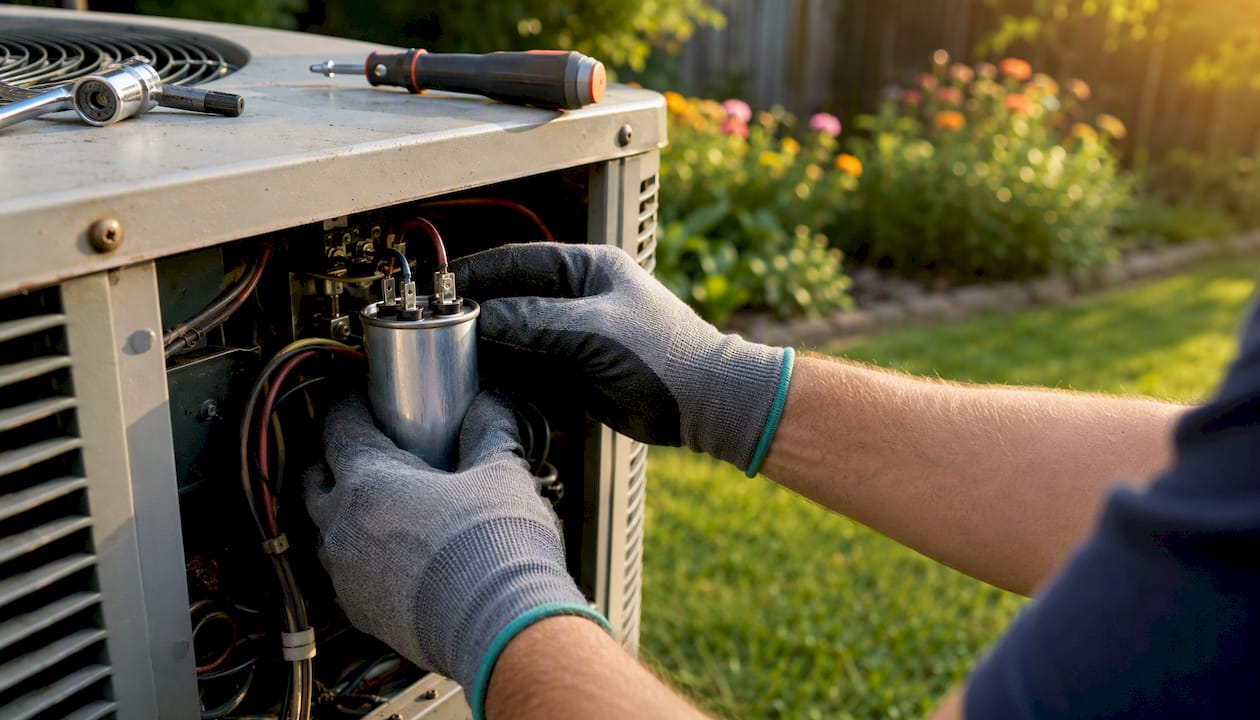
Control board or transformer replacement runs higher, both because the part costs more and because diagnosing it correctly takes more technician time.
Refrigerant leaks and compressor work sit at the top of the cost range. These jobs often involve locating a leak, repairing it, and recharging the system, or in worse cases, replacing the compressor entirely.
Several factors swing these numbers up or down: how old your equipment is, whether it’s still under manufacturer warranty, whether you need same-day emergency service, and whether the part is something a technician carries on the truck versus something that needs to be ordered.
Pro Tip: Ask for a firm, written estimate after diagnosis, before any repair work starts. A technician who insists on replacing the whole system before even testing the capacitor or contactor is skipping the cheap checks first, and that’s a red flag worth pushing back on.
What Does an HVAC Technician Actually Check?
Knowing what a technician looks for helps you understand the diagnosis when it comes in, and it speeds up the visit if you’ve already gathered the right details.
A thorough diagnostic visit typically covers: confirming the thermostat’s call for cooling is reaching the equipment, checking breakers and the outdoor disconnect, testing the capacitor and contactor for continuity and capacitance, measuring amp draw on the compressor and fan motors, checking refrigerant pressures and scanning for leaks, inspecting the transformer and control board, examining the drain line and float switch, and evaluating overall compressor health.
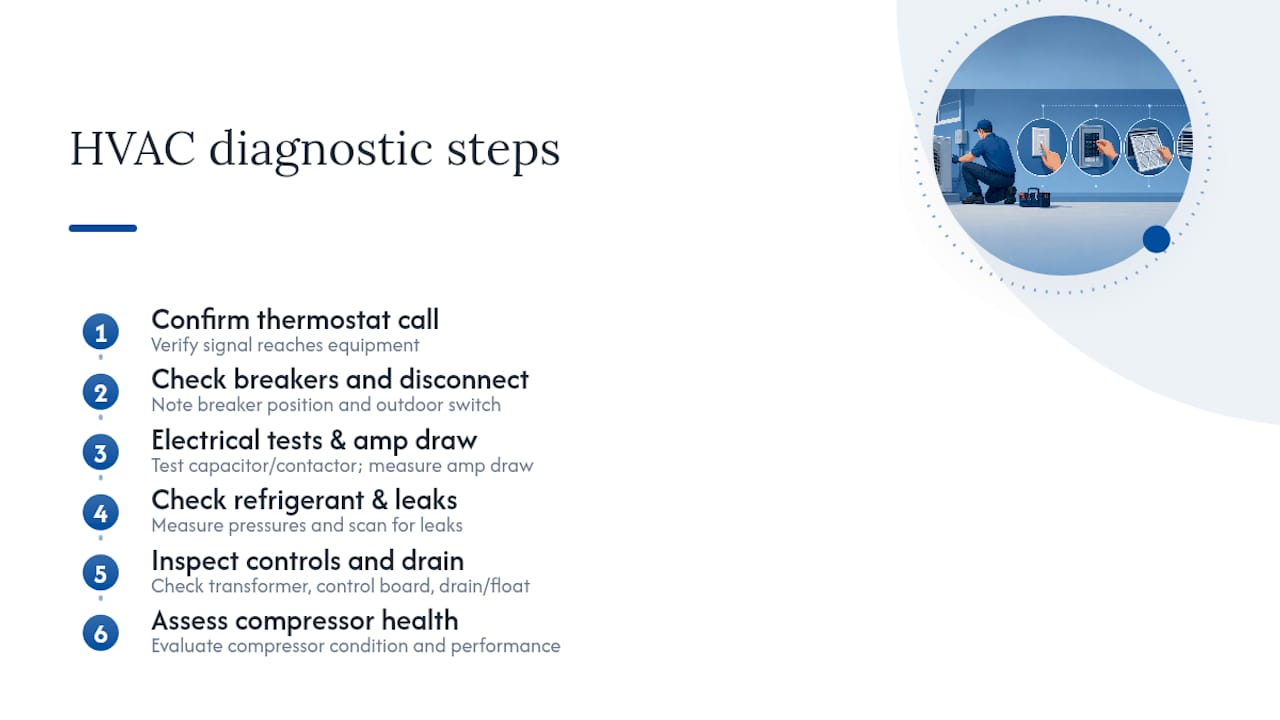
Before the technician arrives, take a few quick notes: a photo of the thermostat display, which position the breaker was in, any unusual noises you heard before the failure, and whether you saw standing water in the drain pan. This kind of detail, paired with confirming whether the indoor blower runs at all, often shaves real time off the diagnostic process.
Most diagnostic visits run 45 minutes to an hour and a half depending on complexity, and reputable companies provide a written estimate once the problem is identified, before any repair work begins.
How Do You Prevent This From Happening Again?
A handful of routine tasks cut your odds of a surprise no-start dramatically, and none of them require special tools.
Change your air filter every one to three months depending on household dust and pets.
Keep two to three feet of clearance around the outdoor condenser, free of leaves, grass clippings, and shrubs.
Flush the condensate drain line once a year, ideally right before cooling season starts.
Replace thermostat batteries annually, even if they haven’t died yet.
Schedule an annual HVAC tune-up to catch a weak capacitor or a dirty coil before it fails on a 100 degree afternoon.
If you’d rather not track all of this yourself, a maintenance membership typically bundles these seasonal checks together with priority scheduling and repair discounts, which matters most on the hottest day of the year when everyone else is calling too.
Doing the Right Checks Before Calling a Pro
Most of what stops an AC from starting is genuinely simple: a dead battery, a flipped breaker, a float switch doing exactly what it’s supposed to do. Those five minutes of checking save homeowners a service call fee more often than people expect, and there’s no reason to feel intimidated by a thermostat or a breaker panel.
Where I draw a hard line is anything past that point. Capacitors hold a charge even after you’ve cut power, contactors can weld shut in ways that aren’t obvious until you’re mid-repair, and refrigerant work requires certification for good reason. Texas Comfort Crew’s approach has always been to explain exactly what’s wrong and why, not to lead with a replacement quote when a $40 part will do the job. That’s not a marketing line. It’s the difference between a technician who respects your wallet and one who’s chasing a bigger ticket.
The homeowners who come out ahead are the ones who do the free checks first, then stop the moment something feels electrical or unfamiliar. That’s not caution for its own sake. It’s just the smarter order to work in.
Fast, Honest AC Repair When You Need It Most
Texas Comfort Crew gets to the actual cause of a no-start AC instead of defaulting to a replacement quote, which means you pay for a $200 capacitor when that’s really the problem instead of a new system you don’t need yet.

When you call, expect a technician who checks the thermostat, breakers, disconnect, capacitor, and condensate line in that order, the same sequence covered above, before recommending anything. If the diagnosis turns up something more involved, like a failing compressor or a refrigerant leak, you’ll get a clear written estimate and a straight answer about whether repair or replacement makes more financial sense for your specific system’s age and condition.
Texas Comfort Crew also offers a maintenance membership that includes seasonal tune-ups and priority scheduling, which matters when your AC picks the hottest week of the year to quit. If you’re in the Greater San Antonio area, find your neighborhood on the service area page and schedule a diagnostic visit today.
Sources
These sources cover manufacturer-specific reset procedures and safety guidance worth reading if your unit’s issue doesn’t match the common causes above:
FAQ
How do I make my AC kick on?
Set the thermostat to “Cool” with a setpoint below room temperature, confirm the batteries are fresh, check both breakers, and make sure the outdoor disconnect is seated. If the condensate pan has standing water, clear the drain line first.
Why is my outside AC not turning on?
The most common reason is a tripped outdoor breaker, a pulled or blown outdoor disconnect, or a failed capacitor preventing the compressor and fan motor from starting, even when the thermostat display looks normal indoors.
How do I force an AC to turn on?
You can’t safely force a unit past a legitimate safety shutdown, and you shouldn’t try. Clear the actual cause instead, whether that’s a full condensate pan, a tripped breaker, or a dead thermostat battery, then give it a few minutes for the anti-short-cycle delay before it restarts.
Is a blank thermostat always a serious problem?
No. A blank screen usually means dead batteries or a thermostat that’s come loose from its base, not a major control board failure. Replacing the batteries or reseating a smart thermostat resolves this in most cases.
When should I stop troubleshooting and call Texas Comfort Crew?
Call immediately if you smell burning, see sparks or ice on the coils, or if a breaker trips again right after you reset it. Texas Comfort Crew’s technicians handle capacitor, contactor, and refrigerant issues that go beyond safe homeowner checks.
Recommended
Comments