
Median 15.3 Years: AC Lifespan, the $5,000 Rule, and When to Replace
- ty8429
- 1 day ago
- 7 min read
Most central air conditioners last 15 to 20 years, with a median replacement age of about 15.3 years across the industry. Climate, installation quality, and maintenance habits push that number up or down significantly. If your unit is 12 to 15 years old and you’re already calling for repairs more than once a season, or your energy bills keep climbing, start planning for a replacement now rather than waiting for a mid-August breakdown.
TL;DR:
Proper installation and favorable climate conditions significantly extend an AC unit’s lifespan beyond the standard 15 to 20 years, sometimes up to 25 years.
Systems installed with correct sizing and quality components tend to last longer, but neglect or poor setup can reduce lifespan by several years.
Regular maintenance, including filter changes and annual tune-ups, can add two to five years to an AC’s effective life, while neglect shortens it by three to five years.
Major repairs costing around $5,000 or more are often more expensive than replacing the unit, especially for units over 15 years old with signs of inefficiency or failure.
Homeowners should consider replacing an AC at 15 years or older if it shows frequent failures, rising energy bills, or refrigerant leak issues, particularly with R-22 units.
Table of Contents
AC Lifespan by System Type: What to Expect
The 15 to 20 year figure people quote for AC lifespan is really a central air number. Other system types age differently, and knowing which one you own changes how you should think about age.
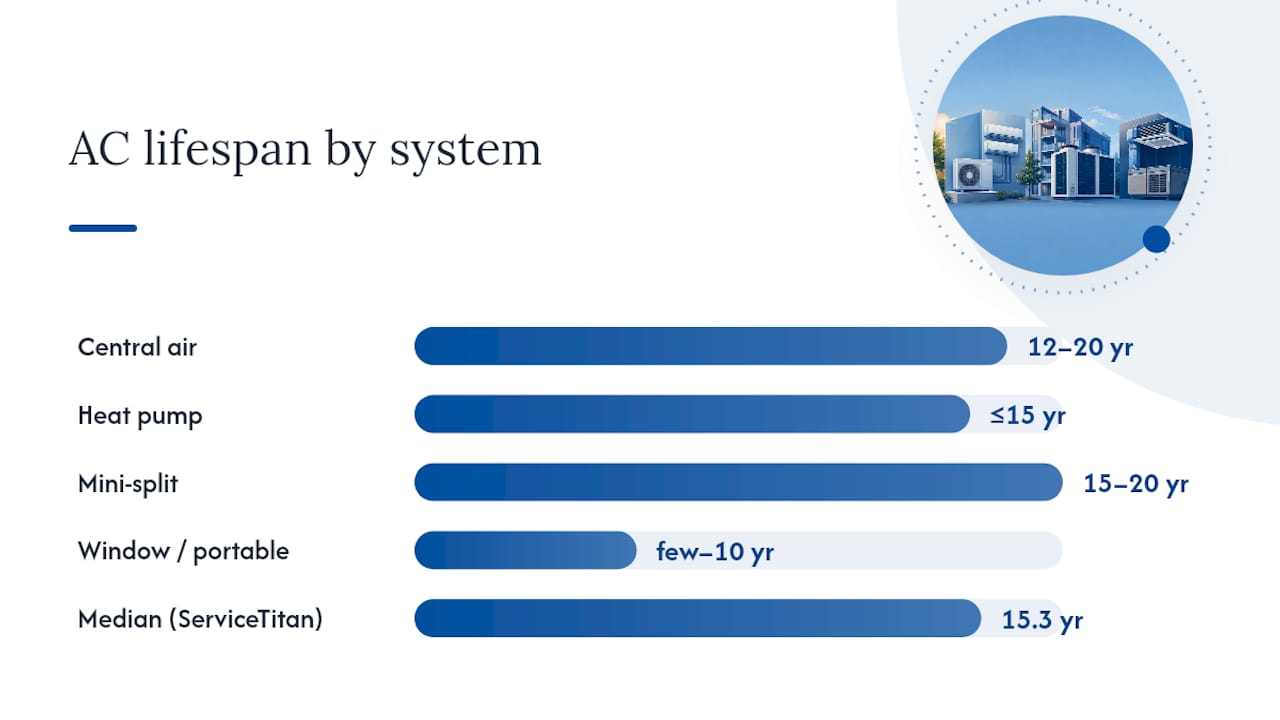
Central air conditioners typically run 12 to 20 years, with Carrier’s own guidance putting well-maintained systems at 15 to 20 years and stating that neglected units can drop to 10 to 12 years. ServiceTitan’s equipment data, pulled from real service records, puts the median replacement age at 15.3 years, with the 25th percentile at 10.6 years and the 75th at 21. That spread tells you something important: a lot of “normal” replacement timing falls well outside the tidy 15 to 20 year range you see quoted everywhere.
Heat pumps tend to have shorter lifespans than AC units, as they operate year-round, generally lasting roughly a decade and a half or less. Mini-splits, when installed by a qualified technician, often reach the top of the range: 15 to 20 years, according to Popular Mechanics, partly because they skip the ductwork that causes so many central-system headaches. Window and portable units generally have shorter lifespans, often around several years up to a decade.
There are rare accounts of AC units lasting multiple decades, but these instances are exceptional and depend on light usage and excellent maintenance. Don’t plan around them.
What Actually Determines How Long Your AC Survives
Two systems installed the same year in the same neighborhood can age at completely different rates. The gap almost always traces back to a handful of factors, and some matter far more than others.
Installation quality sits at the top of that list. A system sized correctly using Manual J load calculations, with AHRI-matched indoor and outdoor components, starts life with a real shot at 20 years. A system that’s oversized or mismatched will short-cycle, meaning it switches on and off too frequently, which stresses the compressor every single day it runs. According to AC Direct, installation quality is one of the two biggest determinants of realistic lifespan, alongside climate. No amount of later maintenance fully undoes a bad install; good upkeep just protects whatever ceiling the installer set.
Climate is the second major lever, and it’s mostly out of your hands. ServiceTitan’s state-level data shows lifespan differences of up to a decade between regions, largely because hot, humid climates force compressors to run far more hours per year than cooler states do.
From there, the factors you can influence stack up:
Filter changes and coil cleaning that keep airflow unrestricted
Annual professional tune-ups that catch refrigerant loss and electrical wear early
Thermostat habits that avoid constant, extreme temperature swings
Keeping the outdoor unit clear of dust, leaves, and direct afternoon sun where practical
Protecting the system from salt air or heavy pollen in coastal or high-allergen areas
Pro Tip: If your outdoor unit bakes in full sun all afternoon, a simple shade structure that doesn’t block airflow can measurably cut how hard the compressor works during peak heat.
Signs Your AC Is Old and Nearing Replacement
Age alone doesn’t tell the whole story, but it’s a useful starting filter for how urgently to act.
Under 10 years old: Lean toward repair. Most components still have plenty of useful life, and a single failure rarely justifies full replacement.
10 to 15 years old: Evaluate case by case. Get a technician’s honest read on the compressor and coil condition before sinking money into a major repair.
15 years or older: Start planning to replace, especially if the unit is showing any of the warning signs below.
Watch for these red flags regardless of exact age: repairs happening more than once a year, a compressor or evaporator coil failure (both are expensive and often signal the rest of the system isn’t far behind), and energy bills creeping up even though your usage hasn’t changed. Poor cooling on hot days, despite a working thermostat, points to lost efficiency rather than a simple fix.
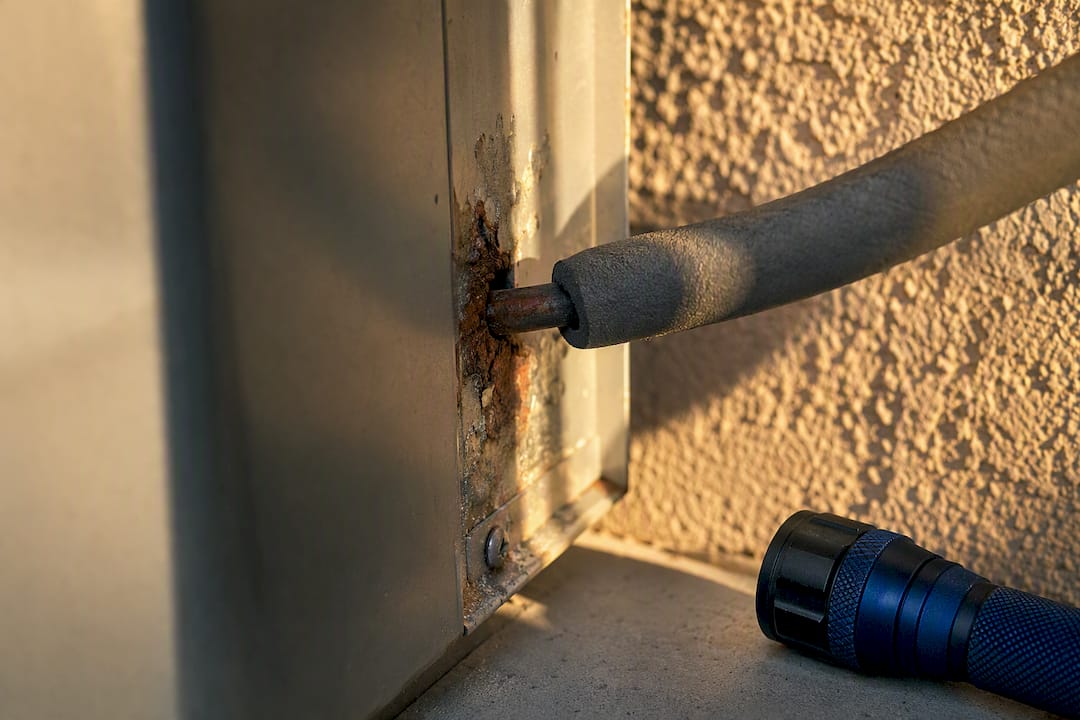
Some signs demand immediate attention no matter the age: grinding or squealing noises, a burning smell from the unit or vents, visible rust or corrosion on the cabinet, and refrigerant leaks. If your system still uses R-22 refrigerant, phased out for new production years ago, repairs involving refrigerant top-offs have gotten expensive and harder to source. That alone is often reason enough to replace rather than repair.
If you’re seeing two or more of these signs, document the failures, get a professional diagnostic, and request a replacement estimate built on proper Manual J sizing, not a guess based on your old unit’s tonnage. Before you assume the worst, it’s also worth checking a few quick things yourself in case the fix is simpler than it looks.
The Maintenance Checklist That Adds Years to Your AC
Consistent upkeep is the biggest lever homeowners actually control, and it’s not complicated.
Filters need changing every 1 to 3 months depending on the filter type, whether you have pets, and local dust or pollen levels. A clogged filter restricts airflow, which forces the compressor to work harder and run longer to hit the same temperature. That extra strain adds up over years.
Annual professional tune-ups should cover coil cleaning, refrigerant level checks, electrical connection inspection, motor lubrication, and a test of the safety controls. Carrier’s own service guidance notes that skipping this kind of maintenance can shave three to five years off a system’s expected life, while staying consistent with it tends to add two to five years back.
A few household habits round out the list:
Keep at least two feet of clearance around the outdoor condenser unit
Trim back plants and clear leaves or debris regularly
Program your thermostat for gradual adjustments rather than drastic swings
Install a whole-home surge protector to guard the compressor from power spikes
Make sure condensate drainage is clear to avoid water damage and mold
A preventive maintenance plan that bundles these inspections into one annual visit tends to be more consistent than remembering to schedule everything piecemeal. If you’re a rental property owner juggling multiple units, staying ahead of these small costs is also one of the more effective ways to manage long-term operating expenses.
Repair or Replace? The Math That Actually Matters
AC Direct’s contractor guidance backs this heuristic, and it holds up because a major repair on an aging system rarely fixes the underlying wear elsewhere.
Another heuristic involves comparing major repair estimates to the cost of full replacement to assess cost-effectiveness, though specific dollar thresholds vary by region. Local pricing varies, so treat $5,000 as a trigger to run the comparison, not a fixed line.
Factor in efficiency gains too. A system installed when R-22 was standard is both less efficient and harder to service today. Get multiple quotes, insist on Manual J sizing for any replacement estimate, and ask each contractor to show expected payback from efficiency improvements before you sign anything. Comparing repair costs against a real replacement quote side by side is the only way to know which option actually saves money.
How Texas Comfort Crew Approaches Aging AC Systems
Most homeowners calling about an old AC have already been told by someone else that they need a full replacement. Texas Comfort Crew starts from a different assumption: a thorough diagnostic first, then a straight answer about whether repair is genuinely cost-effective or whether replacement is truly the smarter move.
That means explaining what’s actually failing, what a repair would cost versus a properly sized new system, and letting the homeowner decide with real numbers in hand rather than a sales pitch. If your compressor is grinding or your energy bills have crept up for no clear reason, get a second opinion and a Manual J sizing estimate before committing to either path. Homeowners in Live Oak, Cibolo, New Braunfels, Helotes, Spring Branch, and Leon Valley can find their local service area here and get a straight assessment instead of a guess.
— Dan Patino
Sources
FAQ
What is the $5,000 AC rule?
It’s a rule of thumb where a single repair estimate near or above $5,000, often tied to a compressor or coil failure, should be compared directly against a full replacement quote rather than assumed to be the cheaper option.
How often should an AC be replaced?
Most central AC units need replacement somewhere between 12 and 20 years, with a median of about 15.3 years, though poor maintenance or a bad climate can push that number down closer to 10.
How many years can an AC last?
A well-installed, well-maintained central AC can last 15 to 20 years, and some reach 25 years under ideal conditions, while window and portable units typically last only 5 to 10 years.
Is a 7-year-old AC unit old?
No. An AC under 10 years old is still well within its expected working life; unless it’s showing frequent breakdowns or a big jump in energy bills, repair is almost always the right call at that age.
Recommended
Comments