
AC Fan Not Spinning? Here's What to Check First
If your AC fan isn’t spinning, turn the system off at the thermostat right now, then check the breaker panel and the outdoor disconnect. Most cases trace back to one of three things: a power interruption, a failed run capacitor, or a blade jammed by debris.
Running the compressor without a working condenser fan is the fast track to a burned-out compressor. Without airflow across the coil, heat has nowhere to go. Continued operation can quickly overheat and damage the compressor(https://bryant.com/en/us/products/air-conditioners/ac-fan-not-spinning/). Shut the system down before you do anything else.
The top three culprits, in order of how often they show up:
Tripped breaker or power loss — the whole unit is dead, not just the fan.
Bad start or run capacitor — the motor hums but the blade won’t turn.
Debris, ice, or a seized bearing — the blade is physically blocked or the motor can’t overcome friction.
Key Takeaways
An AC fan not spinning almost always traces back to power loss, a failed capacitor, or a physical obstruction, and running the system in that state risks compressor damage within minutes.
Point | Details |
Shut it off first | Cut power at the thermostat and breaker before the compressor overheats without airflow. |
Capacitor is the top suspect | A humming fan that won’t turn usually means a failed start or run capacitor, confirmable only with a meter. |
Debris causes real jams | Leaves, sticks, and bent blades from nearby vegetation are a frequent, easy-to-check cause. |
Repeated breaker trips mean stop | Resetting a breaker that trips again within minutes signals a serious fault, not a fluke. |
Texas Comfort Crew tests before replacing | Diagnostic visits include electrical measurements and a written estimate, prioritizing repair over unnecessary replacement. |
Table of Contents
AC Fan Not Spinning: A Quick Homeowner Checklist
Before you assume the worst, work through these checks in order. Each one takes a couple of minutes and rules out the cheapest, most common problems first.
Identify which fan is actually dead. If the indoor blower isn’t moving air through your vents, that’s a different problem than an outdoor condenser fan that’s sitting still while the compressor hums. Stand near the outdoor unit and listen. A humming compressor with a motionless top fan points straight at the condenser fan or its capacitor.
Check the thermostat. Confirm it’s set to Cool, the fan switch is on Auto (not Off), and the temperature is set below the current room temperature. Dead batteries in a wall thermostat can shut the whole system down silently.
Check the breaker and outdoor disconnect. Flip the breaker fully off, wait 30 seconds, then back on. Pull the outdoor disconnect box (usually a gray metal box near the condenser) and check the pull-out fuse or switch.
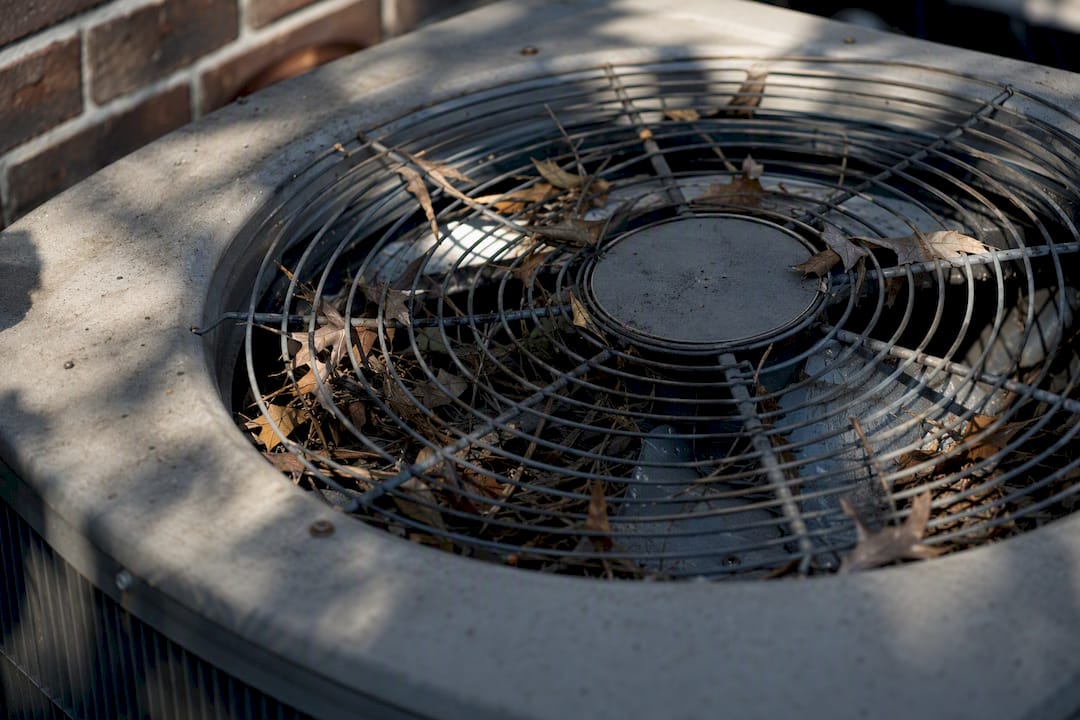
Look for debris or bent blades. Cut power at the disconnect first. Peer through the top grille for leaves, sticks, or a bird’s nest, and check whether a blade looks bent or is catching on the housing.
Replace or inspect the air filter. A clogged filter restricts airflow and can trigger safety shutoffs on the indoor blower, which sometimes gets mistaken for a fan failure.
Pro Tip: With the disconnect pulled and power confirmed off, you can safely give the fan blade a gentle push with a wooden stick, never your hand. If it spins freely on its own after the nudge, a weak start capacitor is the likely cause, not a seized motor.
What’s Actually Causing Your Fan Not to Spin?
Once the quick checks are done, it helps to understand what’s actually failing and how each fix scales in cost and complexity.
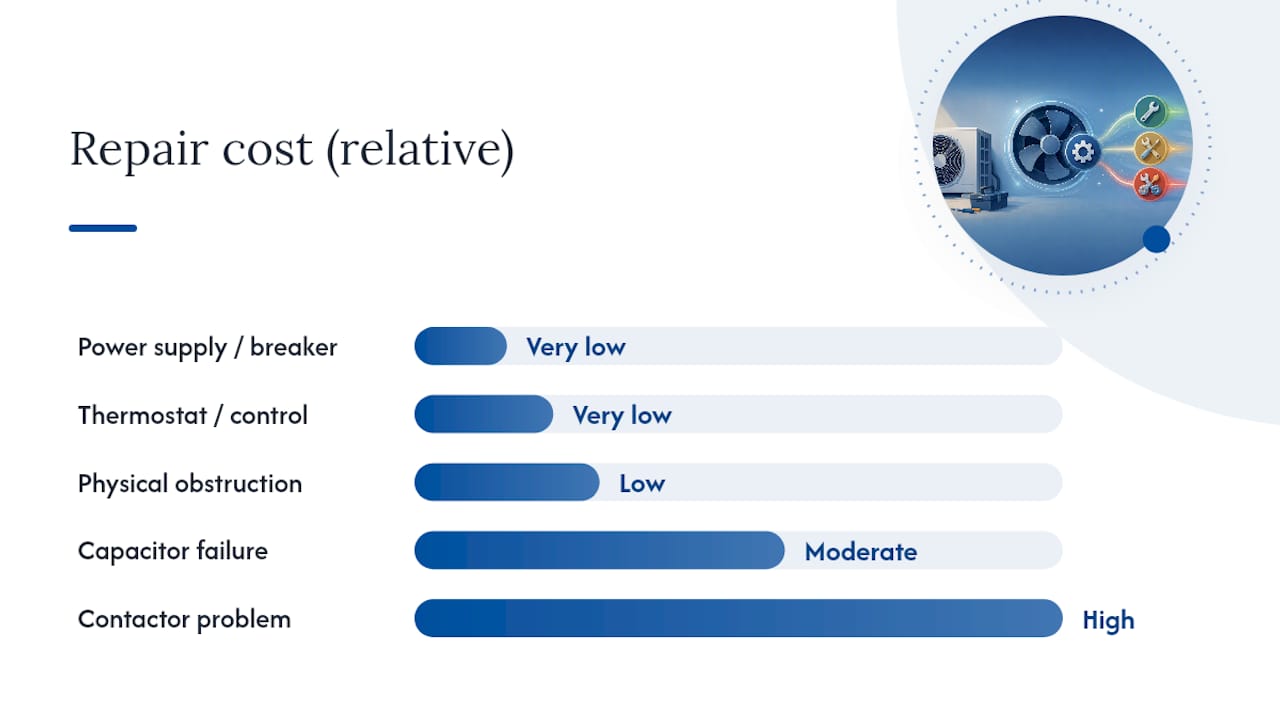
Power supply and breaker faults are the cheapest fix and the easiest to misdiagnose. A single trip after a storm is normal. But repeated trips point to a deeper electrical fault or a component drawing locked-rotor current, and resetting the breaker over and over is a genuine fire risk, not a troubleshooting strategy.
Thermostat and control issues are easy to overlook because they feel too simple to be the answer. Dead batteries, a fan mode stuck on “Off,” or a smart thermostat that lost its Wi-Fi connection and defaulted to standby can all leave a perfectly healthy fan sitting idle.
Physical obstruction or damaged blades show up constantly in units near trees or shrubs. Leaves and twigs jam the blade path, and years of yard debris can bend a blade just enough to make it bind against the housing. Clearing vegetation and debris around the condenser reduces the odds of a jam considerably.
Contactor problems produce a distinct symptom: a loud click at the outdoor unit followed by nothing. The contactor is the relay that sends power to the fan and compressor, and when its contacts burn or pit, it stops closing the circuit reliably. Replacing one involves working inside a live electrical panel, which is a job for a technician.
Capacitor failure is the single most common cause behind a humming fan that won’t turn. The motor hums because it’s getting power but lacks the electrical push needed to start spinning. Capacitors can fail two ways: visibly, with a bulged or leaking top, or internally while looking completely normal, which is why a clean-looking capacitor can still be dead. Confirming it requires a multimeter set to capacitance, not a visual check.

Fan motor bearing failure or a burned motor shows up as grinding noise, a burning smell, or a motor housing that’s hot to the touch even when it’s not running. Bearings wear out over years of use, and once they seize, the motor either won’t turn or draws excessive current trying to. Motor replacement runs more involved than a capacitor swap and typically means removing the fan blade and top grille.
System-level causes can mimic a fan problem even when the fan itself is fine. A frozen evaporator coil, low refrigerant, or a failing compressor can all trip a safety switch that shuts the fan down as a protective measure. These require refrigerant gauges and system knowledge well outside a homeowner’s toolkit.
Symptom | Likely Cause | Next Step |
Total silence at the unit | Breaker, disconnect, or thermostat issue | Reset power, check thermostat settings |
Humming, fan won’t turn | Failed start/run capacitor | Push-start test (power off), then call a pro for meter testing |
Loud click, then nothing | Faulty contactor | Schedule a technician; involves live panel work |
Grinding noise or burning smell | Worn motor bearings or burned motor | Stop the system, call a technician |
Ice on the refrigerant lines | Frozen coil or low refrigerant | Turn off system, let it thaw, call a technician |
Comprehensive condenser fan diagnostics generally confirm the same pattern: power and mechanical obstructions cause a small share of failures, but electrical component failure, especially capacitors, accounts for a disproportionate share of service calls on units over five years old.
When Should You Stop Troubleshooting and Call a Pro?
Cut power completely before doing anything past a visual inspection. Set the thermostat to Off, flip the breaker, and pull the outdoor disconnect. Confirm the fan blade doesn’t move even with a light touch before assuming it’s safe to work near.
Capacitors deserve special caution. A run capacitor stores an electrical charge even after power is cut, and discharging one improperly can deliver a serious shock. That’s why professional testing, not a homeowner with a screwdriver, is the standard recommendation.
Call a technician immediately if you notice:
A burning smell from the indoor or outdoor unit
A breaker that trips again within minutes of resetting
Ice buildup on the refrigerant lines or indoor coil
Visible sparks, melted wiring, or a scorched contactor
Any wiring that looks chewed, corroded, or loose
Pro Tip: A technician can measure amp draw, test actual capacitance against the rated microfarad value, and check sealed-system pressures, none of which a homeowner can safely verify with tools found in a garage.
What Does It Cost to Fix an AC Fan That Won’t Spin?
Repair costs scale with complexity. A capacitor swap sits at the low end, contactor replacement runs a bit higher, and a full fan motor replacement costs more still. Compressor issues sit in a different category entirely, and replacing a compressor can approach the price of a new outdoor unit on older systems.
Unit age matters as much as the repair itself. A capacitor fix on a 4-year-old system is an easy call. The same fix on a 16-year-old unit with a failing compressor and no warranty coverage is often the moment to weigh replacement instead.
Get a written estimate before any repair over a couple hundred dollars.
Ask whether the part is still under manufacturer warranty.
Get a second opinion on any recommendation involving compressor replacement.
What a Transparent Diagnostic Visit Should Look Like
Plenty of homeowners have a story about a technician who showed up, glanced at a humming fan, and quoted a full system replacement before touching a multimeter. Texas Comfort Crew built its process around the opposite instinct: repair first, replace only when the numbers actually support it.
A proper diagnostic visit covers the visual inspection for debris and blade damage, electrical measurements on the capacitor and contactor, a check of the filter and coil condition, and a written estimate that spells out exactly what failed and why. You get to see the actual reading on the capacitance meter, not just a verdict. That transparency is the difference between trusting a recommendation and just hoping it’s right.
Homeowners across the Greater San Antonio area consistently mention two things in feedback: technicians who explain what they’re doing, and quotes that match what was actually wrong.
— Dan Patino
Get Your AC Fan Fixed by a Team That Explains Every Step
A dead condenser fan doesn’t have to mean a new AC unit. Texas Comfort Crew built its entire model around fixing what’s actually broken, whether that’s a $20 capacitor or a worn motor bearing, instead of defaulting to a replacement quote. If you’ve worked through the checklist above and you’re still staring at a fan that won’t spin, that’s exactly the point where a technician’s meter takes over from a screwdriver.

Every visit includes a full electrical diagnostic, a written estimate before any work starts, and a clear explanation of what the readings actually mean, so you’re deciding based on facts instead of a sales pitch. Texas Comfort Crew covers homeowners throughout the Greater San Antonio service area, including dedicated coverage for New Braunfels and Schertz. If your outdoor fan has gone quiet, schedule a diagnostic visit and get a straight answer about what it’ll actually take to get cool air moving again.
Sources
FAQ
How Do I Reset My Outside AC Fan?
Cut power at the thermostat, flip the breaker off for 30 seconds, then back on, and check the outdoor disconnect for a tripped fuse or switch. If the fan still won’t spin after a full reset, the problem is likely electrical, not just a power blip.
What Should I Do If My AC Blower Fan Isn’t Spinning?
Check the thermostat’s fan setting, confirm the batteries are good, and inspect the air filter for a heavy clog that could be triggering a safety shutoff. If the indoor blower stays silent after that, the motor or its control board likely needs a professional look.
How Can I Tell If It’s a Bad Fan Motor or a Bad Capacitor?
With power safely cut at the disconnect, a fan that spins freely with a gentle push from a wooden stick usually points to a weak start capacitor, while a blade that resists turning or feels gritty suggests worn motor bearings.
Can I Run My AC If the Fan Isn’t Working?
No. Running the system without a working condenser fan lets heat build up in the compressor with nowhere to escape, and continued operation can cause lasting compressor damage within a short time.
Recommended
Comments